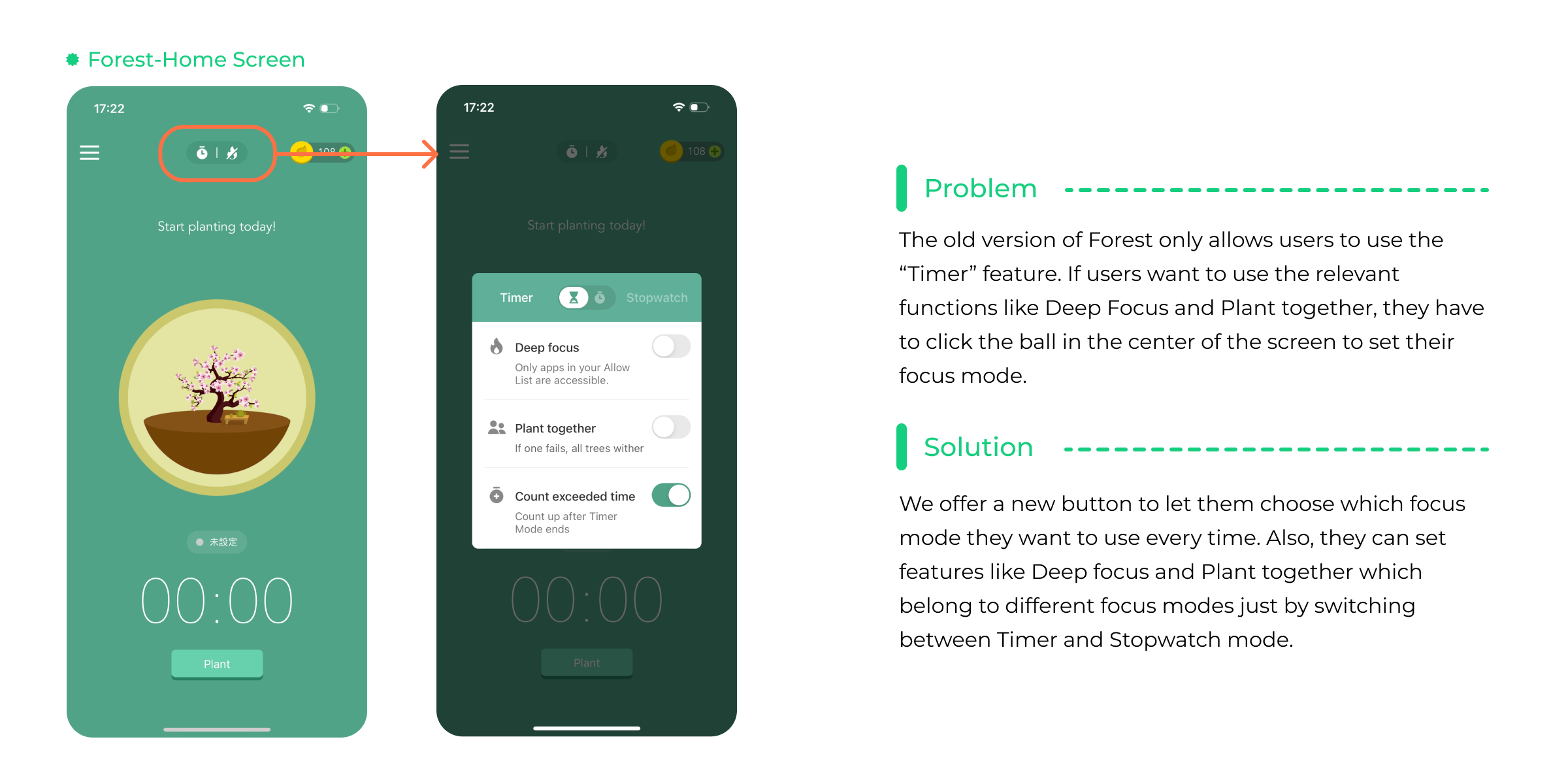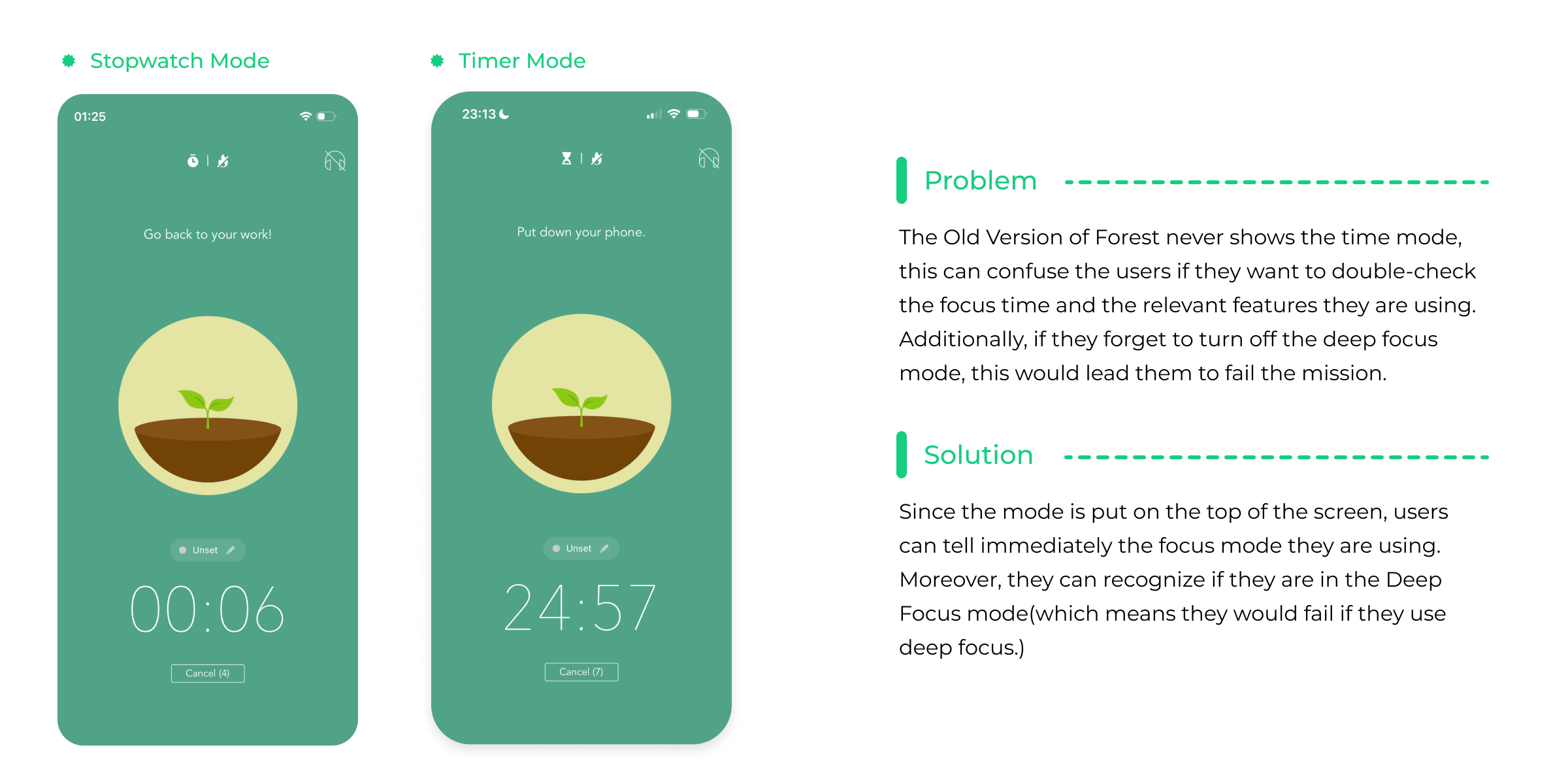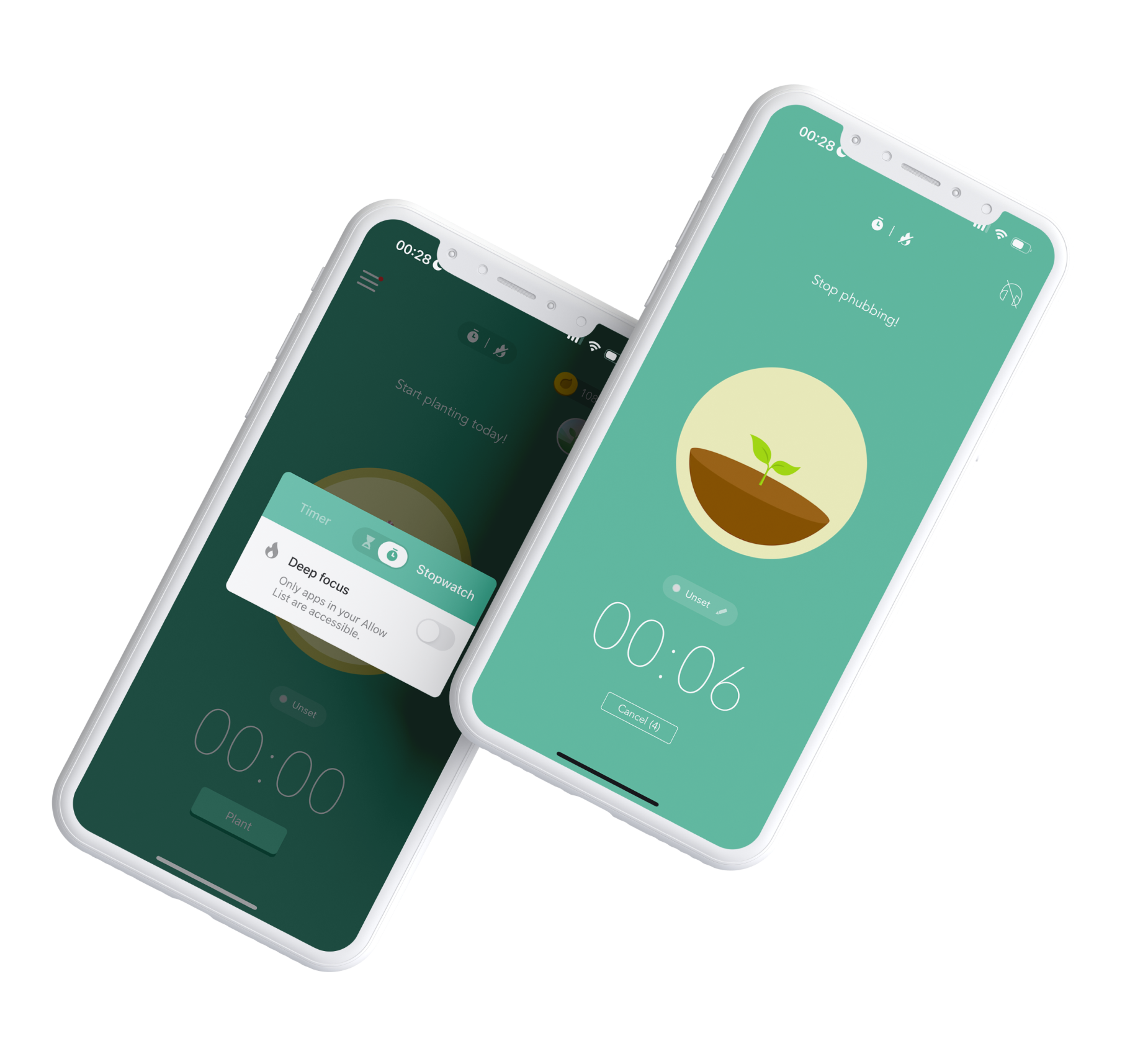



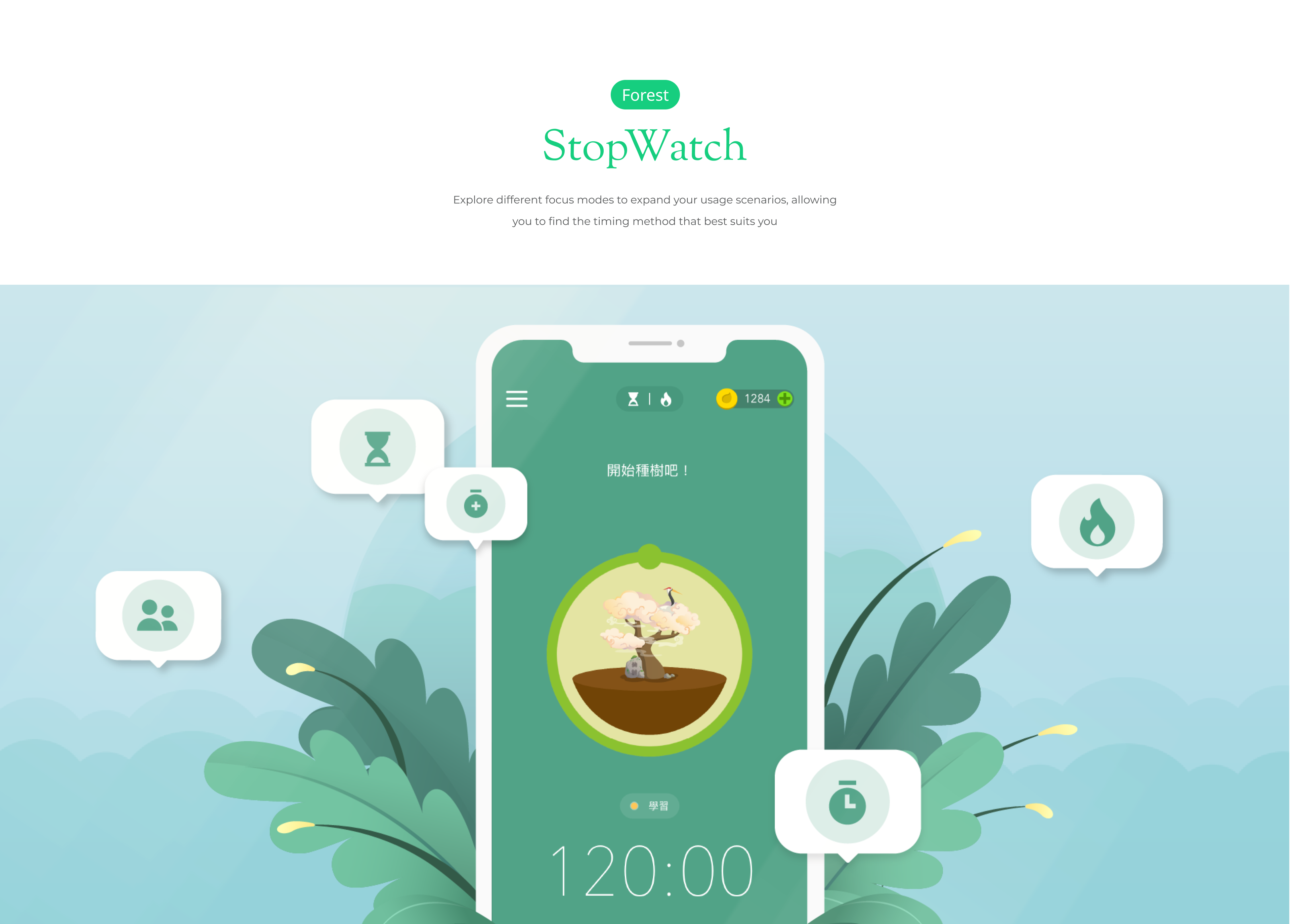
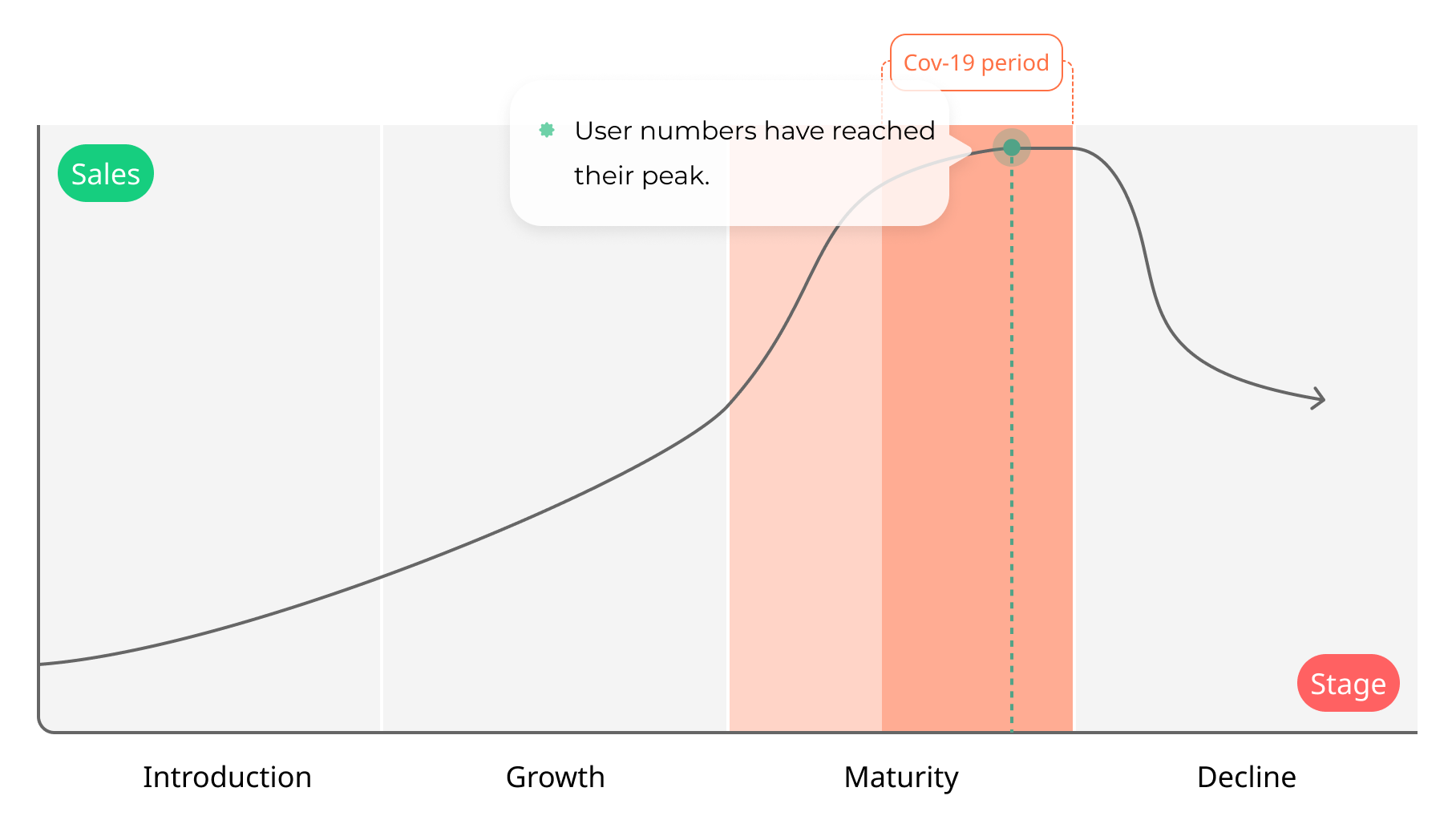
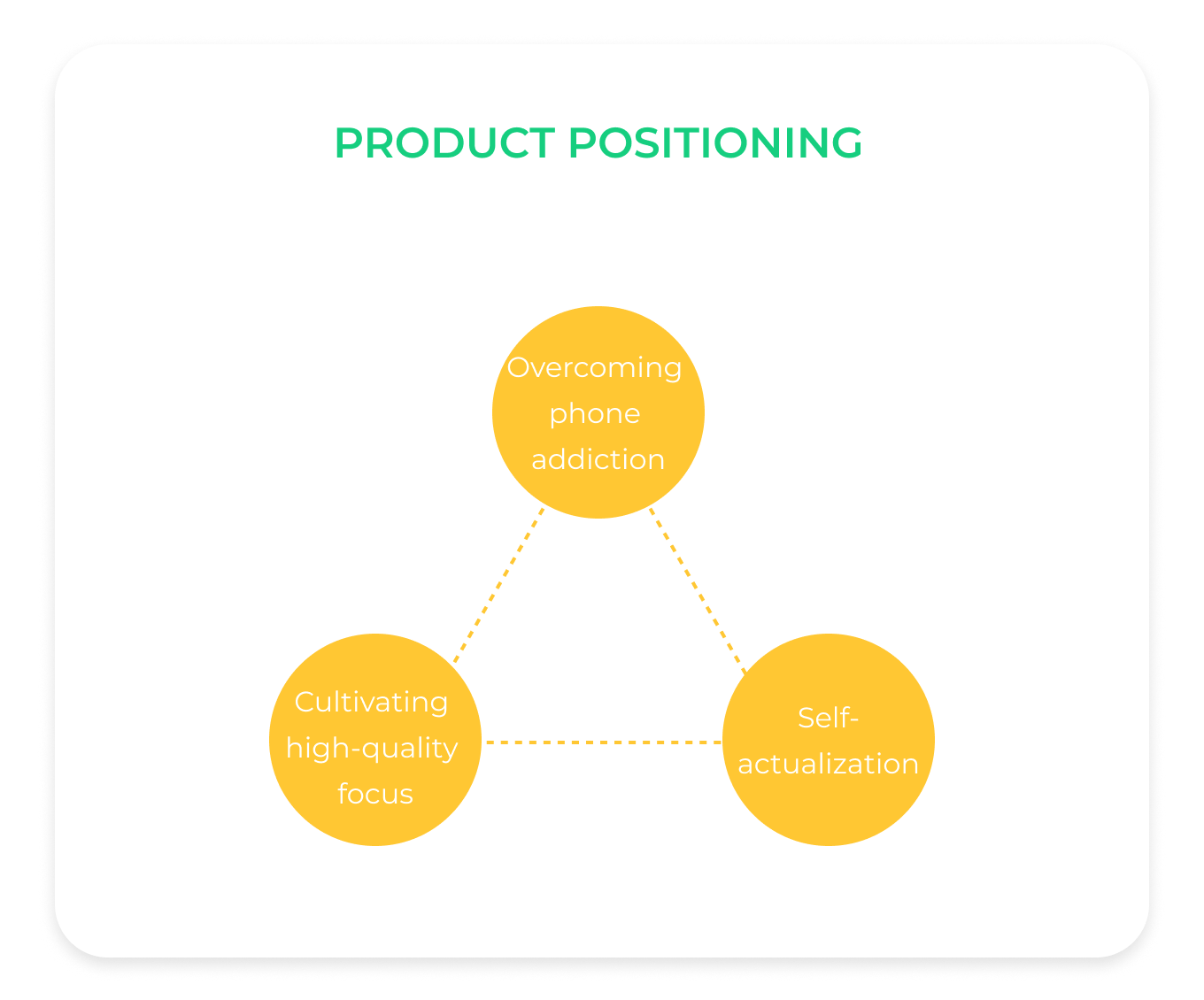
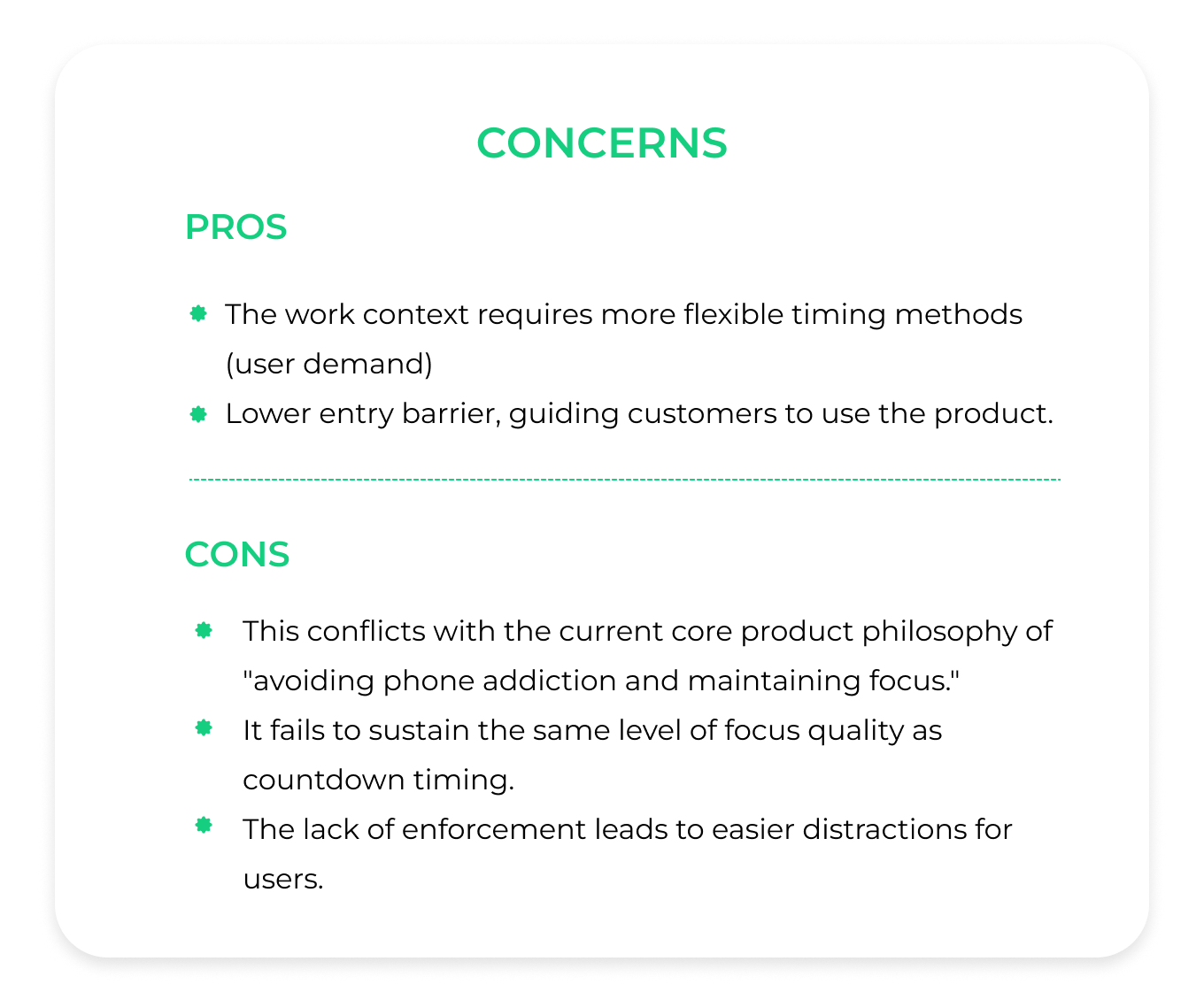
Many competitors offer "stopwatch" feature, but it has not been incorporated into the core functions in Forest due to its "low enforcement" conflicting with product positioning '' reduce phone dependency''.
Additionally, the core function includes " Count exceeded time " ( continuing to record extra time after a timer ends), raising the question of whether the scenarios for using Stopwatch differ from those of exceeded timing. Through qualitative research, these aspects aim to validate whether the use scenarios for the "Stopwatch" function conflict with the existing feature.
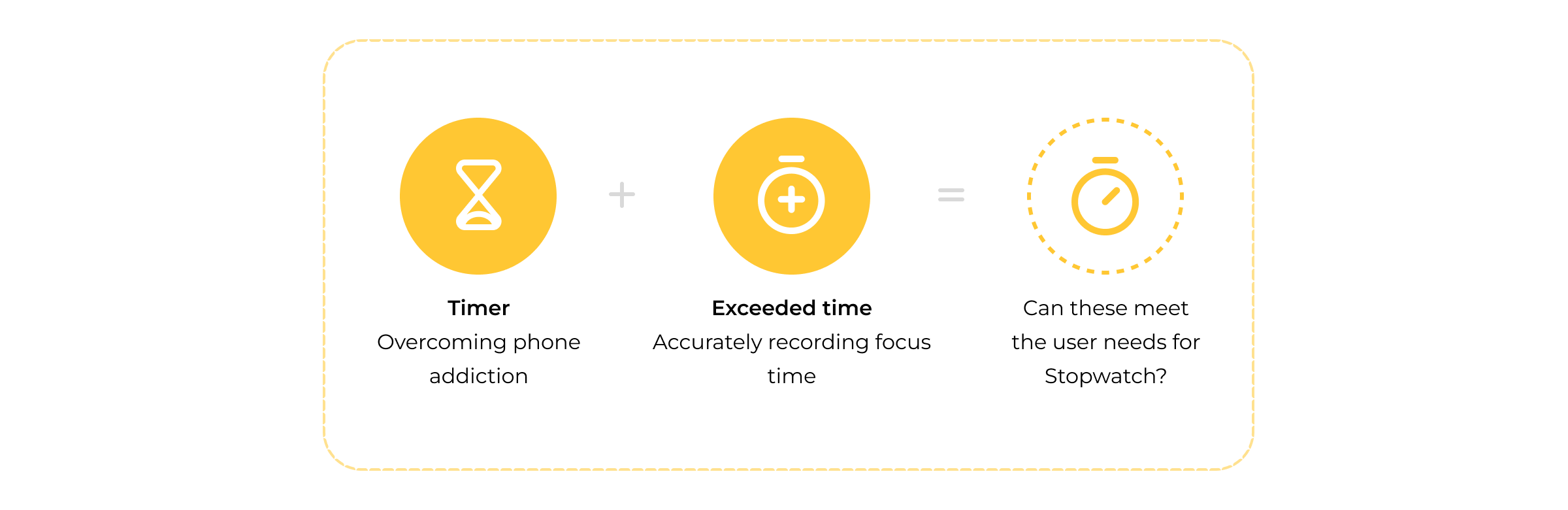
Through qualitative research, determine whether the "Stopwatch" feature blurs the core values of the product, leading to "reduced enforcement and increased user distraction," resulting in tasks not being accomplished.
Chinese users have a greater need for Stopwatch compared to overseas users.
Female Chinese users have a greater need for recording and Stopwatch compared to male users. Regarding Stopwatch, overseas users place more emphasis on the design of reward mechanisms compared to Chinese users.
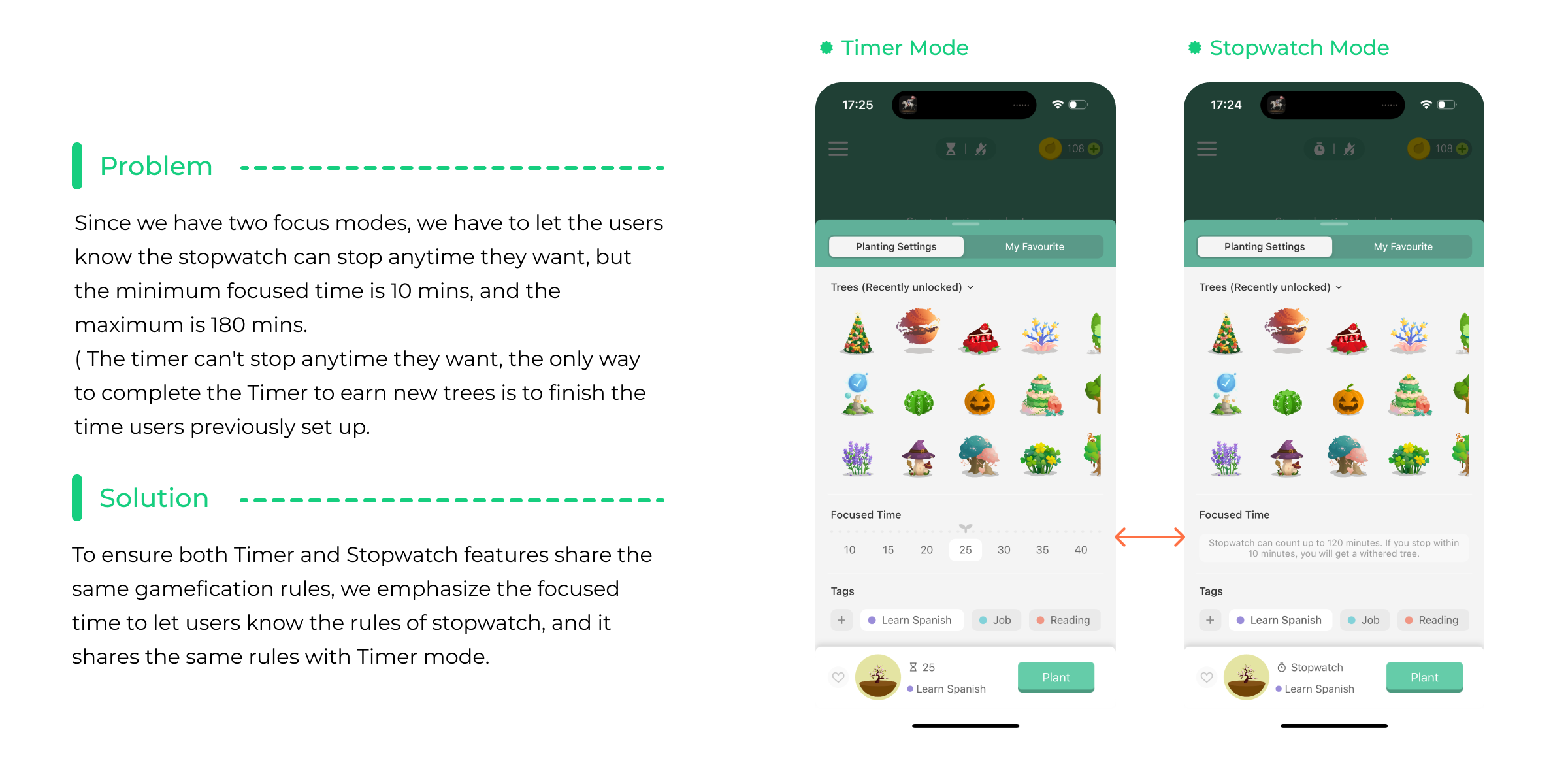
If a limitation on the number and duration of pauses is designed for the easily distracted group, it will increase their acceptance of Stopwatch
Extended timing does not satisfy the needs of those who complete tasks ahead of time; therefore, it cannot increase satisfaction for users who propose Stopwatch.
The proportion of Chinese users suggesting Stopwatch is higher compared to that of overseas.
In terms of gender ratio proposing Stopwatch, a particularly high percentage is observed among Chinese females, whereas overseas, the ratio is higher among males.
Suggesting Stopwatch does not seem to have a clear correlation with occupation (possibly due to insufficient data).
Overseas workers use the timing function in work scenarios much more than Chinese users.
Chinese users still focus primarily on concentration-driven and rigid learning.
The duration of single use by Chinese users is nearly 30 minutes longer than that of overseas users.
Among users who request Stopwatch, the proportion using competitors' products is much higher than the average.
Heavy users are generally more stringent than light users, and those who favor Stopwatch features tend to gravitate towards the median.
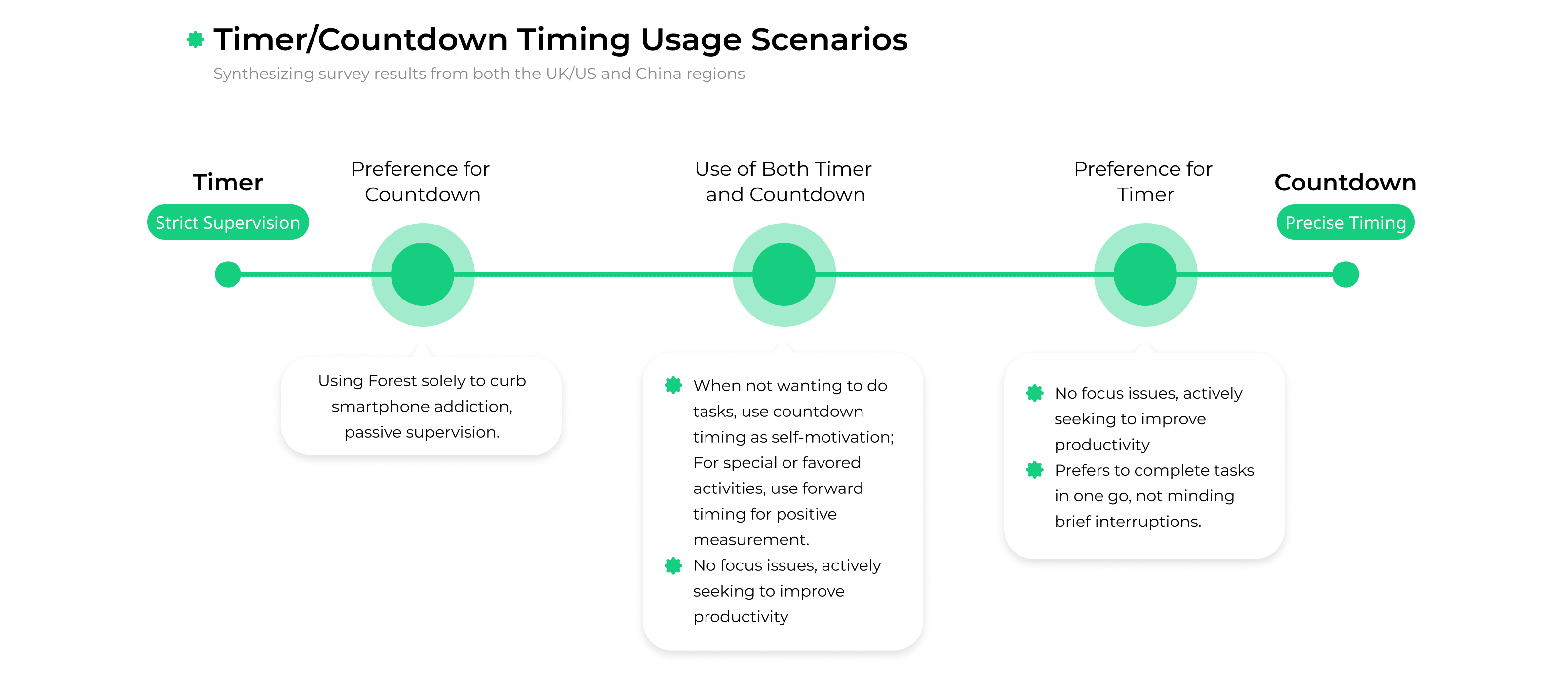
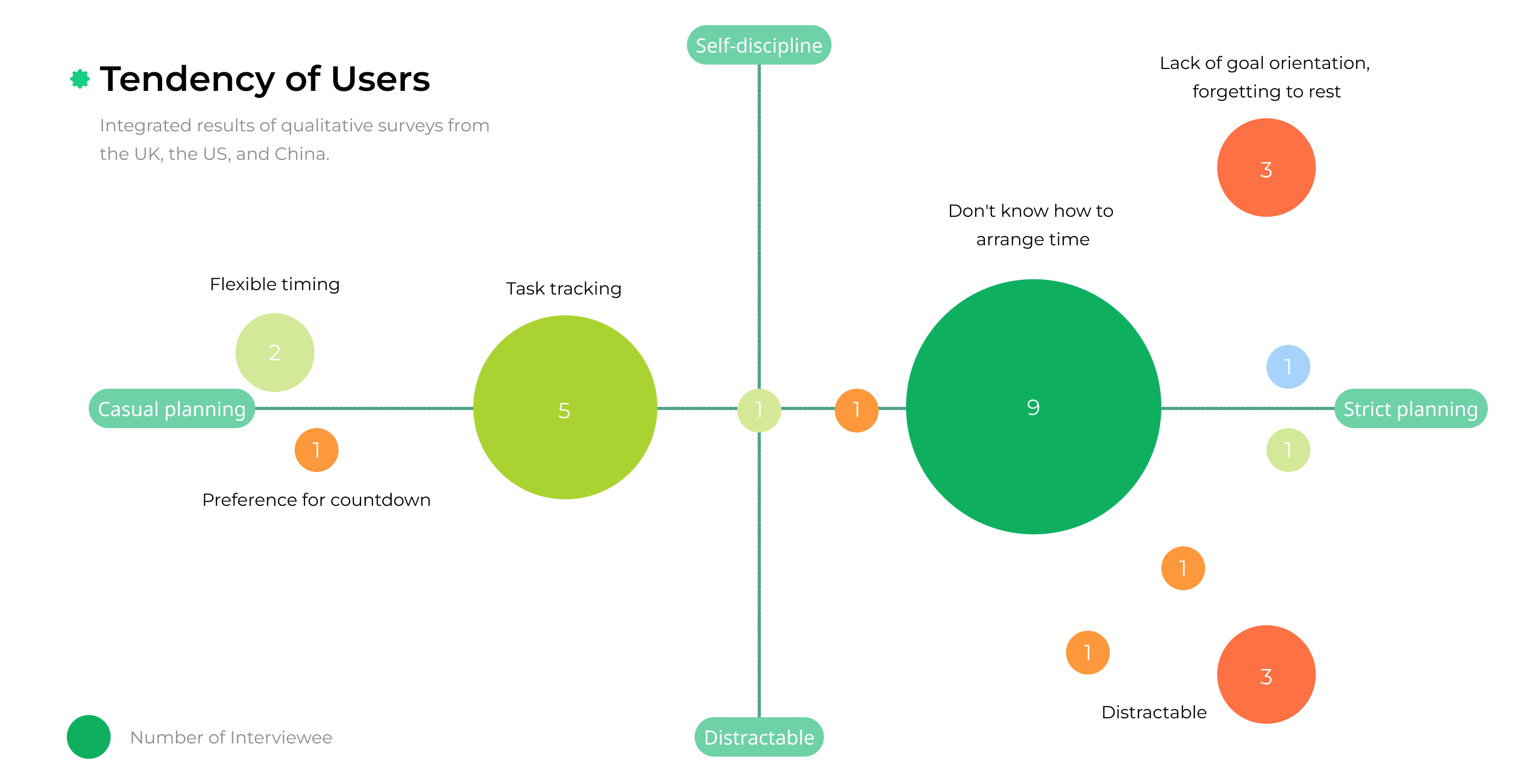
After the initial survey, we made key discoveries and proceeded with further hypotheses. During qualitative interviews, we gained deeper insights into the scenarios in which users utilize timer / stopwatch and found that the contexts in which users extend timers significantly differ from those of Stopwatch.
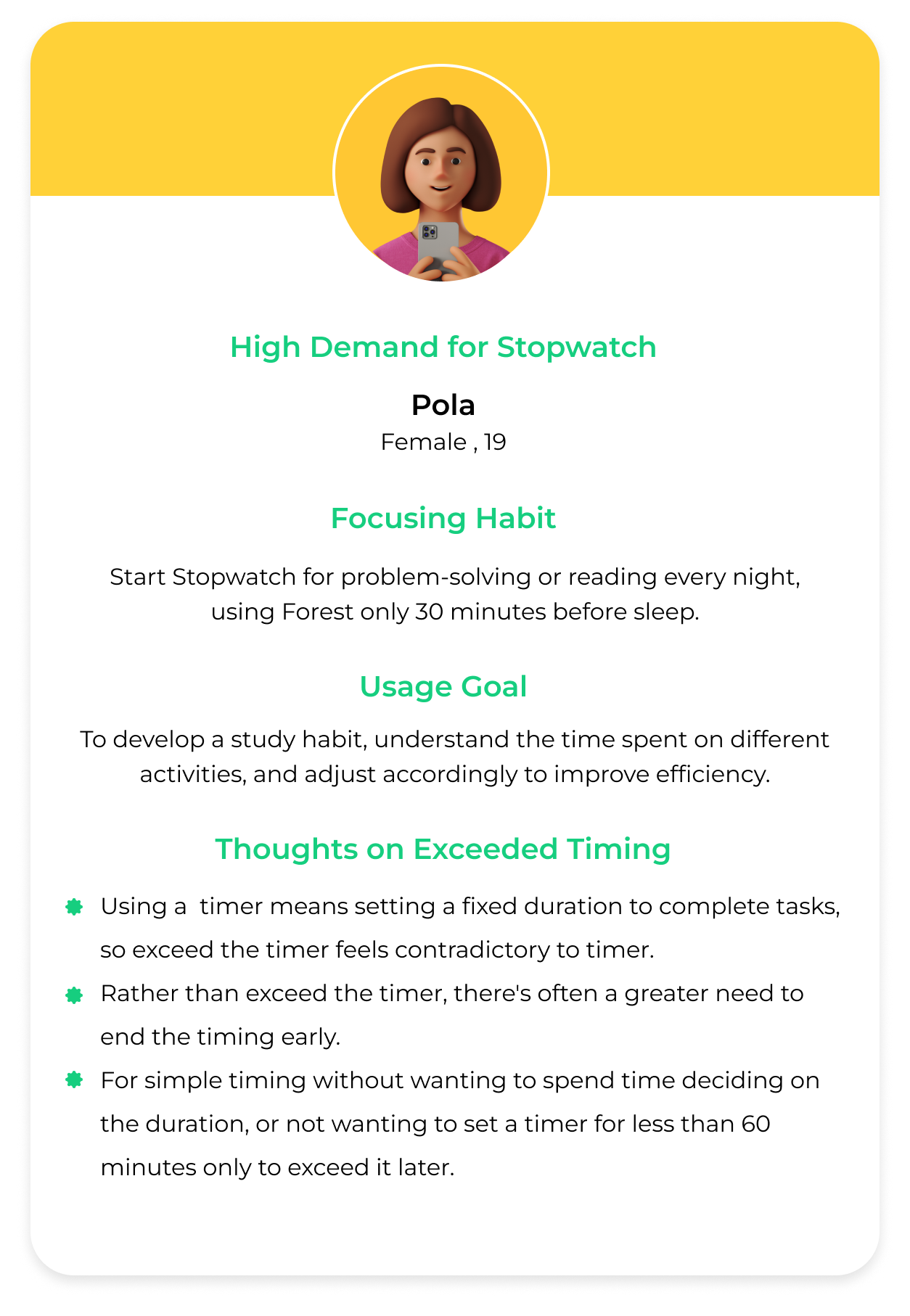
Across various professions, ages, and usage scenarios, Stopwatch effectively expanded users' needs, indirectly proving that the fundamental seasons of users who use exceeded time and those who use Stopwatch are different, validating the hypotheses generated from the survey.
Furthermore, we resolved the concerns regarding the conflict between the Stopwatch function and the product concept, gaining more confidence in designing features through two personas.