

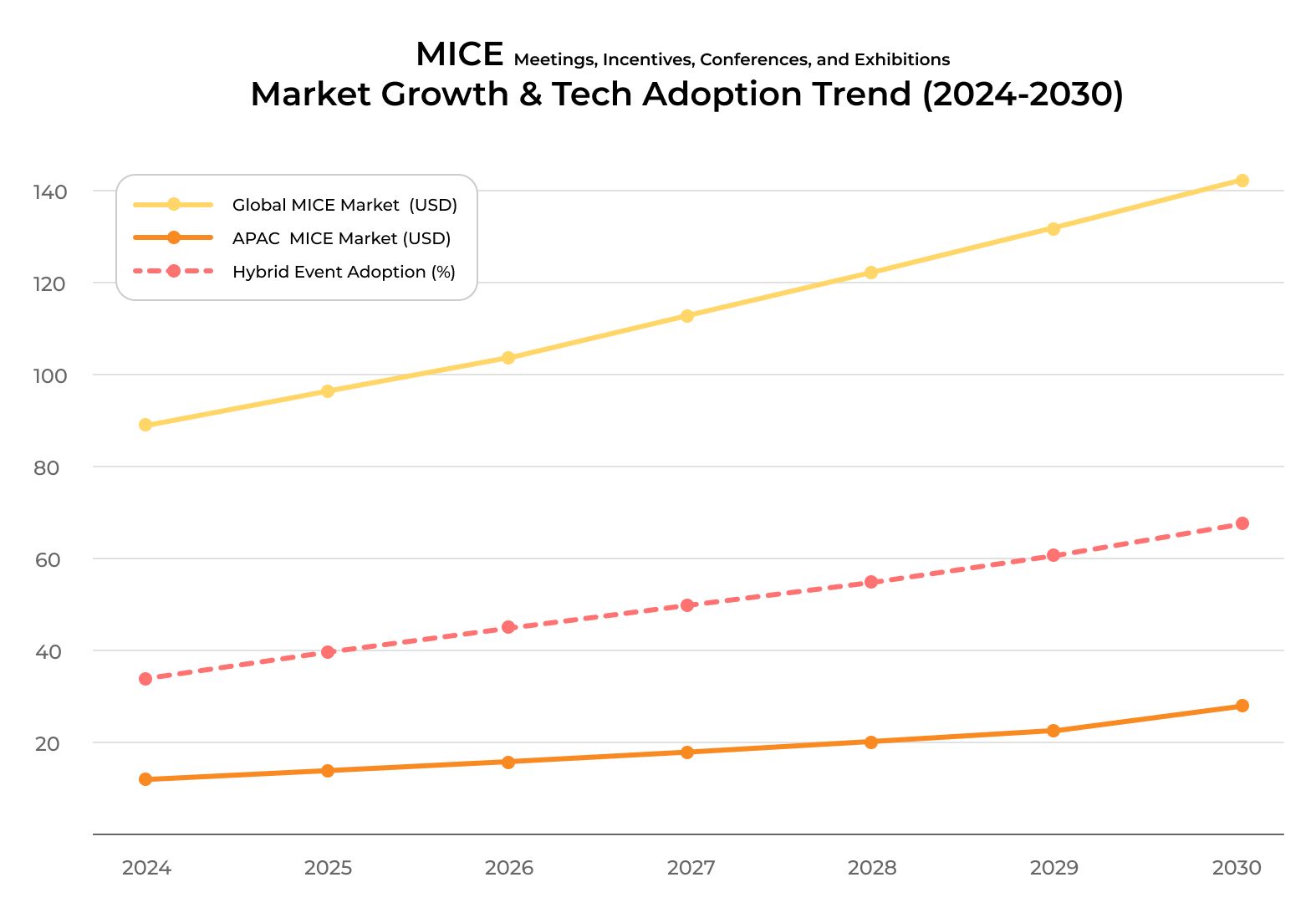
" The fast-growing USD 1.47T global MICE market still relies on outdated tools,
creating a clear gap for real-time, personalized event platforms. "
This expansion highlights the sustained relevance and economic impact of exhibitions.
Yet, despite this growth, many events still depend on outdated navigation tools such as printed maps or static mobile apps—creating a clear opportunity for digital, real-time, and personalized solutions that better serve both visitors and organizers
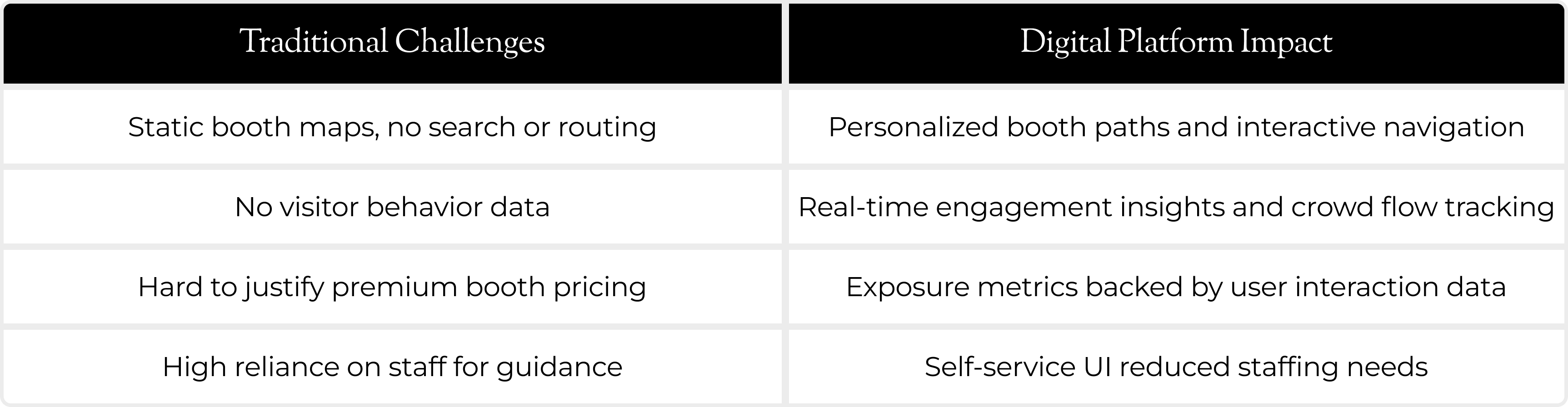
Despite their scale, most exhibitions still rely on static tools like printed maps or outdated apps—creating very different pain points for visitors and organizers.Visitors struggle to find booths, plan visits, or stay engaged. Organizers lack real-time insights, sponsor control, and content flexibility.By mapping shared underlying problems across both groups, we uncovered a core insight: True platform value comes from solving for both sides simultaneously, not just adding features.
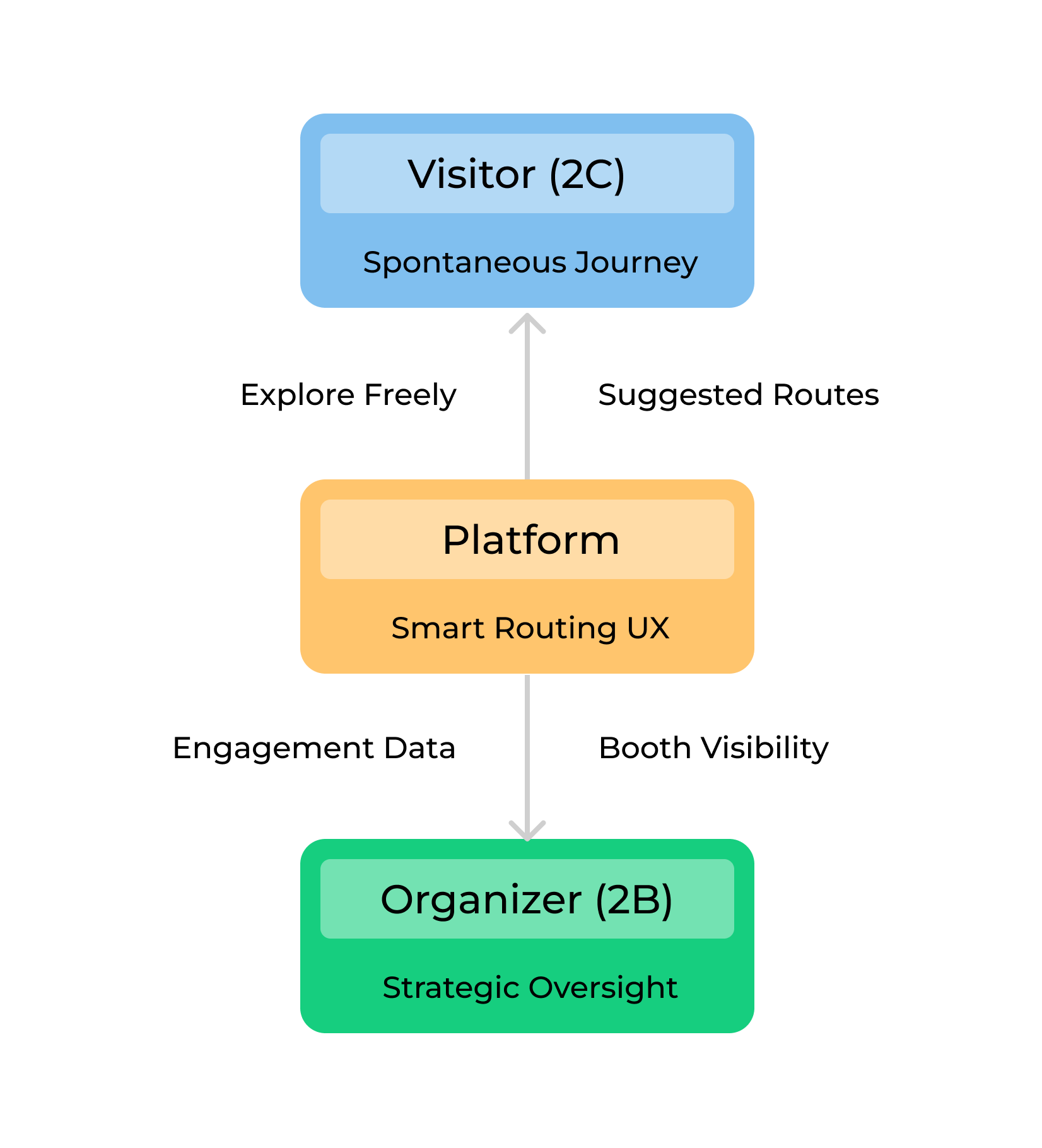
Large-scale exhibitions serve two fundamentally different needs.Visitors want freedom—to discover, wander, and enjoy without friction.
Organizers want structure—to guide movement, expose key booths, and optimize operational flow.
This created a core tension:
How do we offer visitors autonomy, while giving organizers just enough influence—without either side feeling restricted?
Our solution had to balance:
1. Invisible guidance with open exploration
2. Passive data collection with respectful interaction
3. Real-time value for visitors, long-term value for organizers
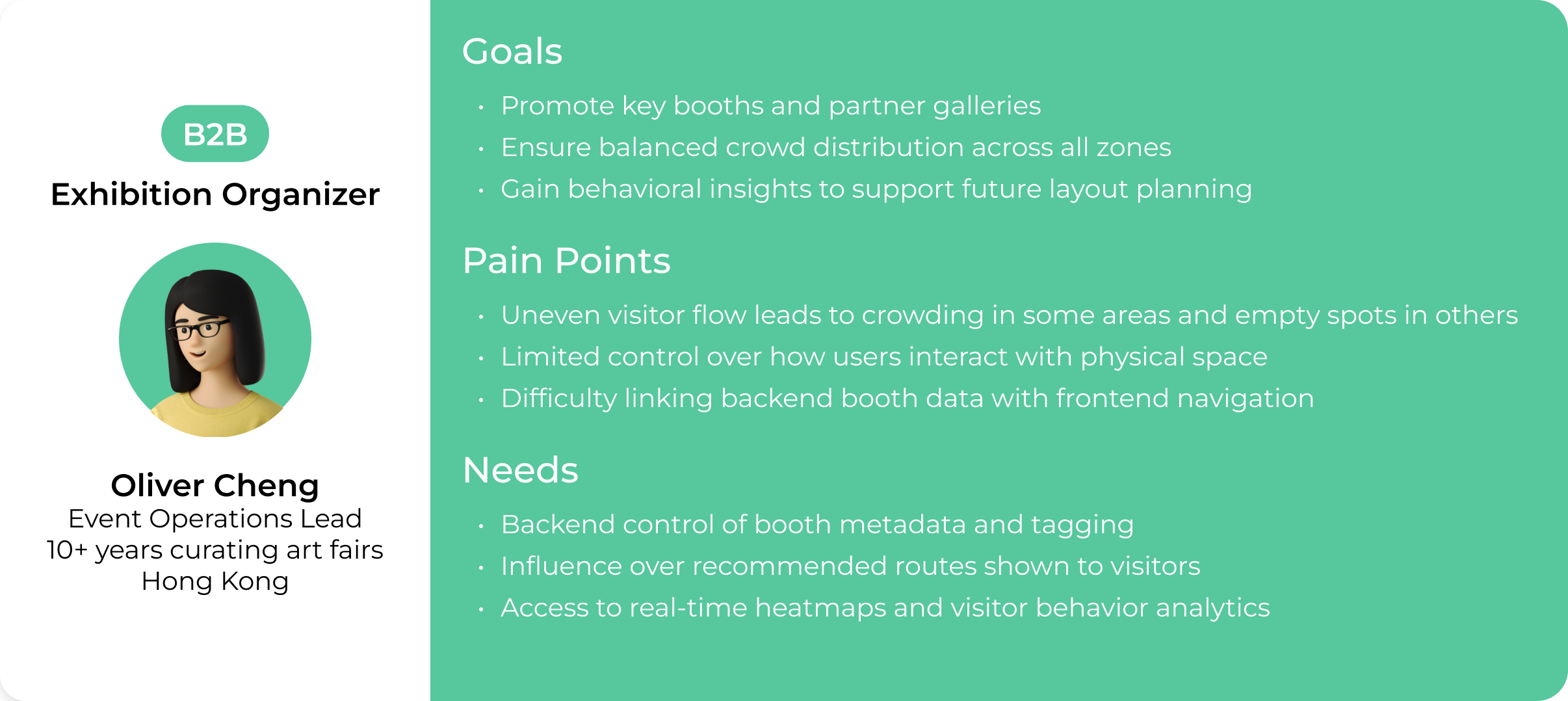
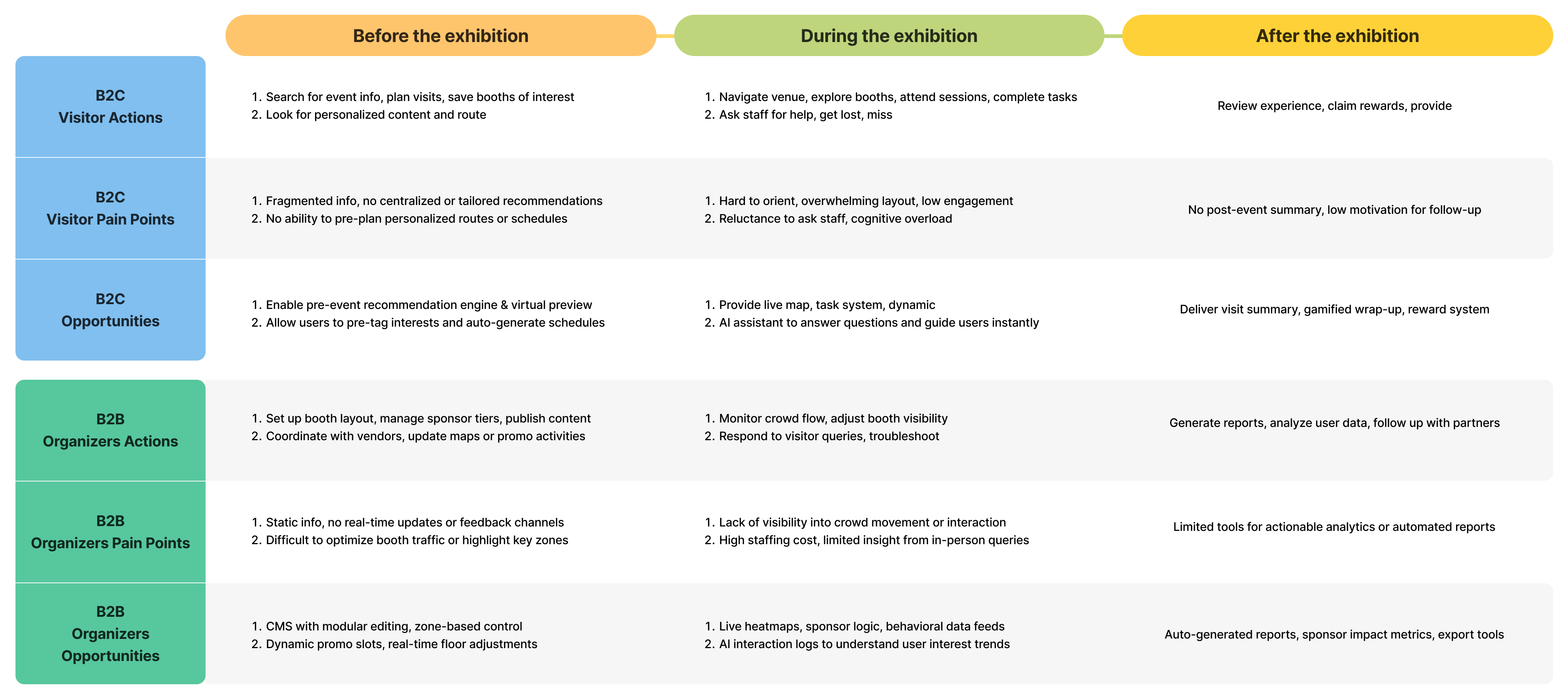
Designing for exhibitions like Art Basel meant addressing two distinct personas :
Visitors, who seek intuitive discovery and low friction.
Organizers, who prioritize control, sponsor exposure, and behavioral insights
Understanding this duality revealed core design tensions—between freeform exploration and operational control.
Mapping both sides helped us build a modular platform flexible enough to support both user journeys and business goals.
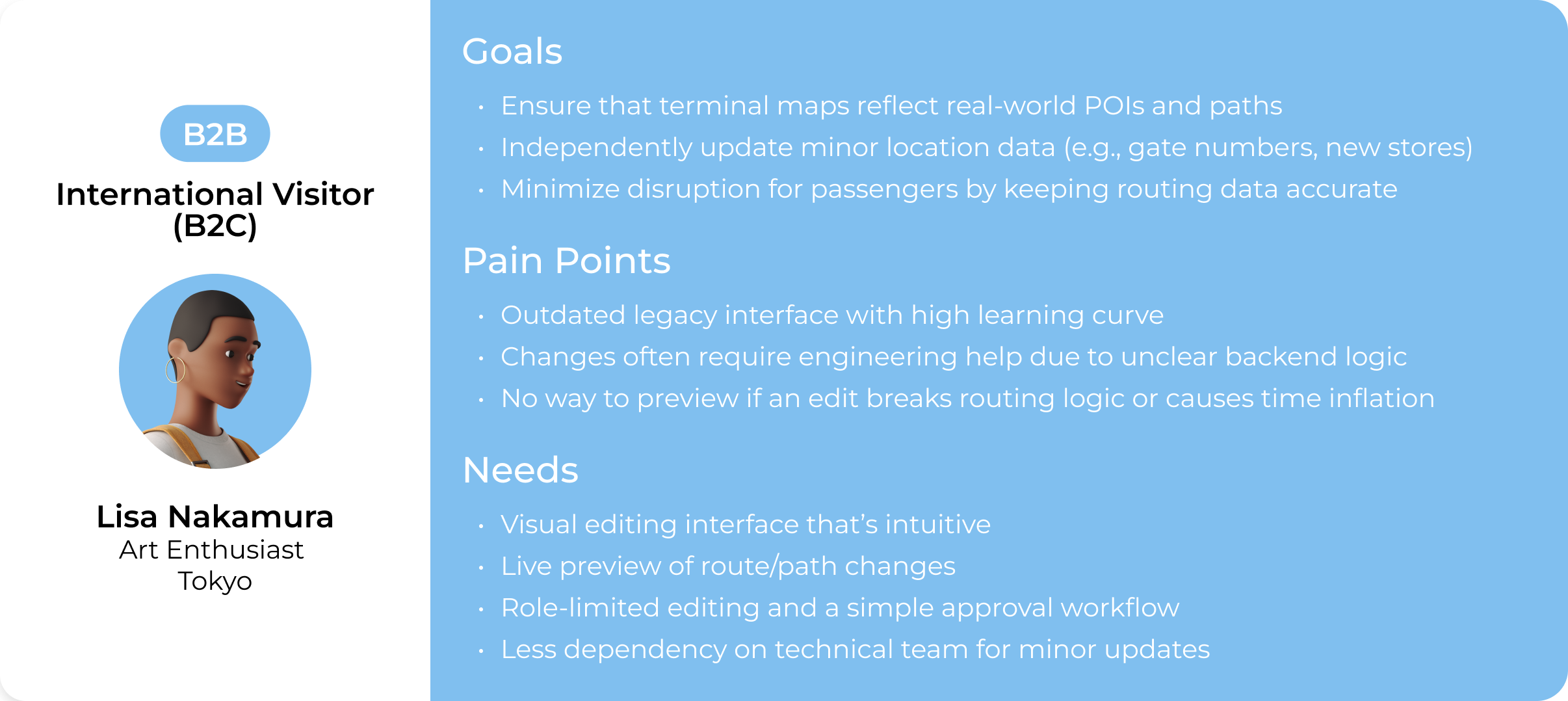
Before defining features or platform logic, we needed to fully understand the behaviors, frustrations, and unmet needs across both visitors and organizers.This dual-perspective journey map helped us align user goals with business priorities across the entire exhibition timeline—from discovery and navigation to post-event insights. It ensured that our platform wasn’t just solving isolated problems, but delivering value systemically, at the right time, for the right users.
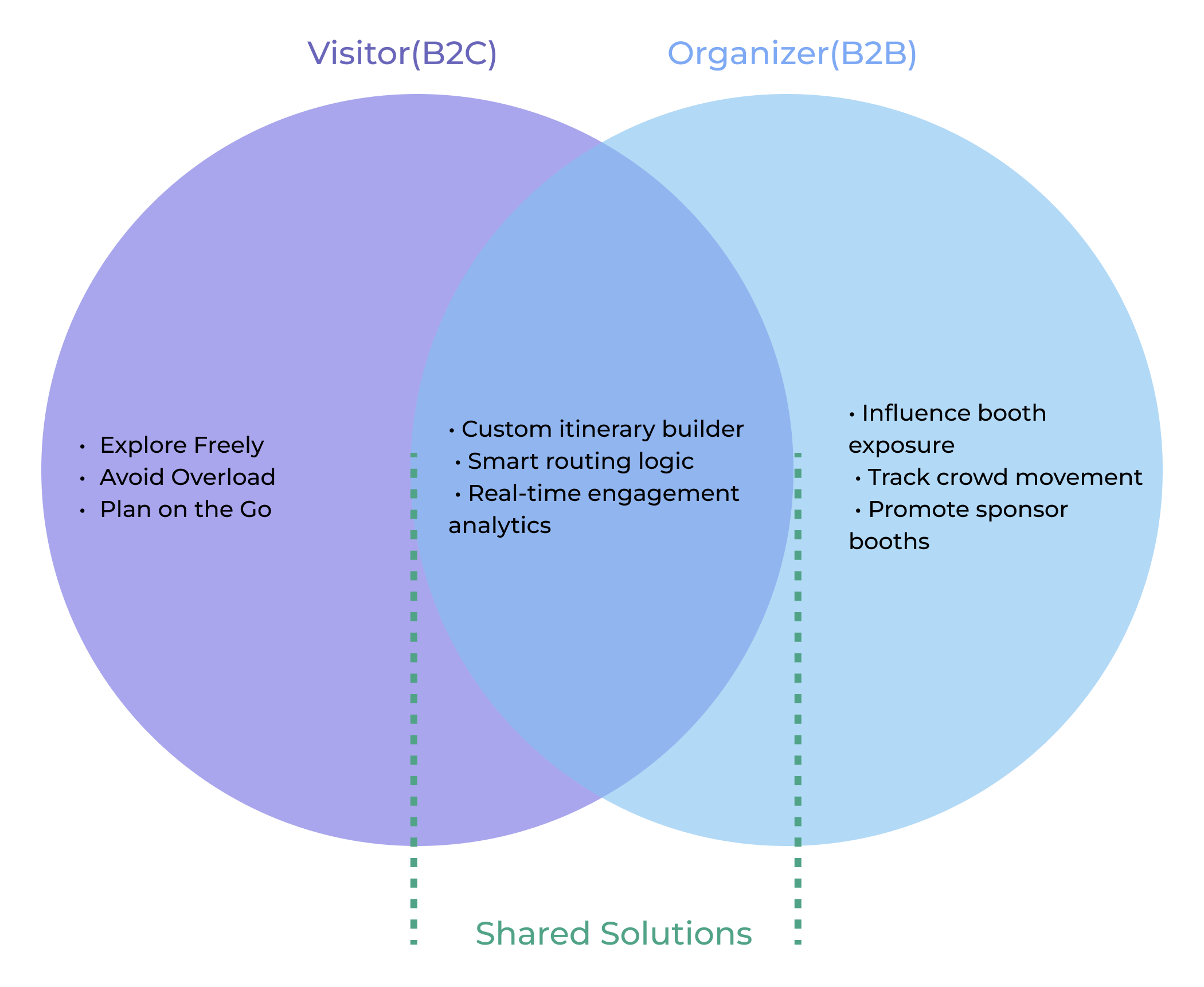
Visitors prioritized spontaneity and ease, often planning on the go and avoiding rigid routes. Organizers, on the other hand, needed structure—visibility into traffic flow, balanced crowd distribution, and ways to guide exposure without disrupting the visitor experience.
This contrast shaped our platform’s dual approach: enabling user-driven exploration while embedding subtle control mechanisms for organizers.
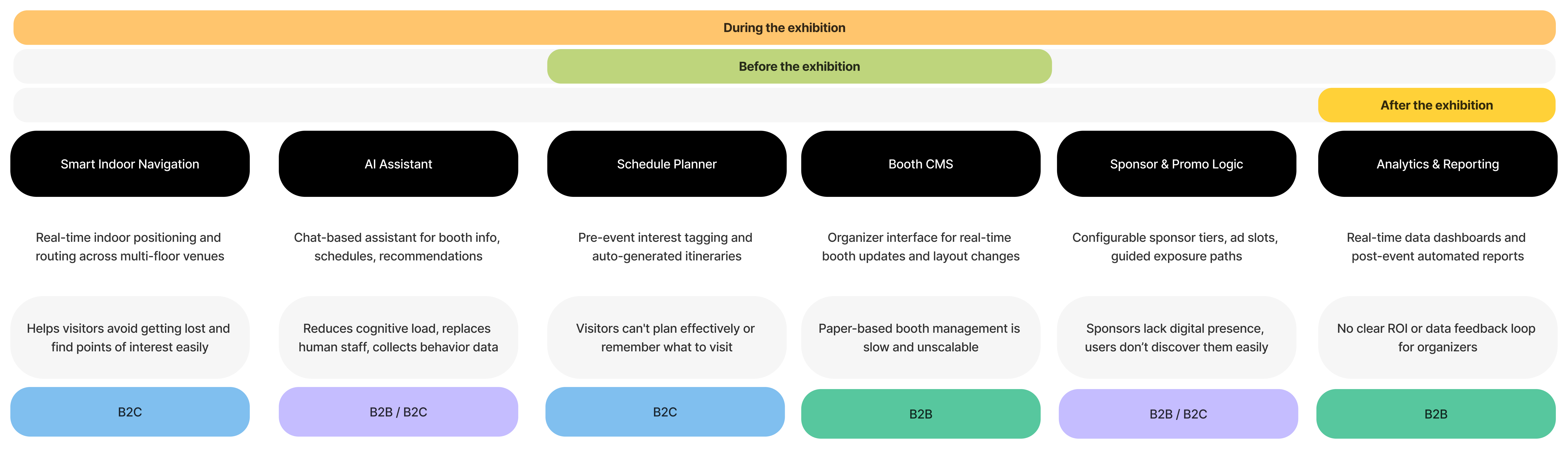
After aligning needs across two user groups, we identified platform features that could simultaneously support exploration (B2C) and control (B2B). These features were not isolated UI components—they were UX strategies embedded with business logic.
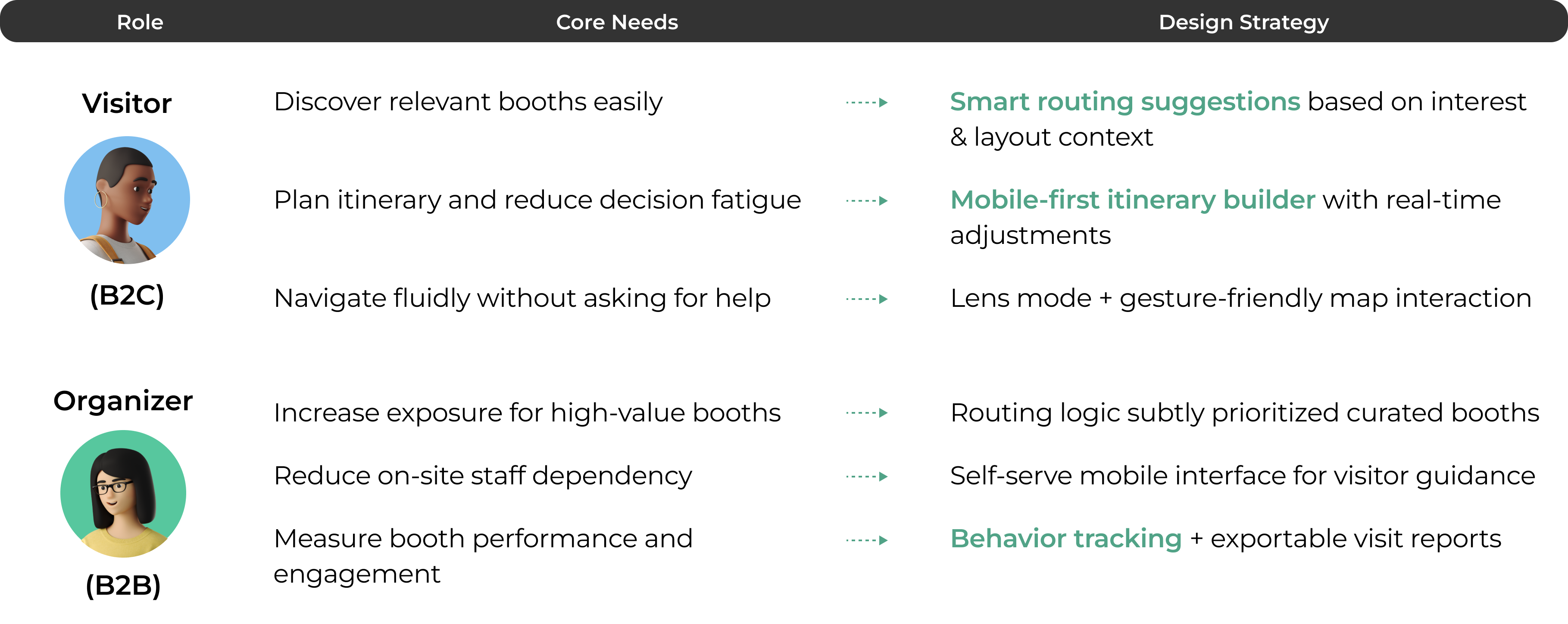
This diagram outlines our initial MVP hypothesis—each module mapped to a specific B2B or B2C need identified through research.
By structuring the product modularly, we ensured flexibility, faster deployment, and a clear path toward scalable SaaS development.
Art Basel is a world-renowned international art fair, attracting thousands of local and overseas visitors within a tight, high-density timeframe. While the event provides physical maps and signage, first-time visitors—especially international ones—struggled to navigate the space, plan routes, or discover interesting content on their own.This challenge echoed many of the spatial problems we’d already solved in airport environments. We saw an opportunity to apply our IoT-based navigation tech in this new domain and test whether exhibitions could benefit from a similar user experience strategy.
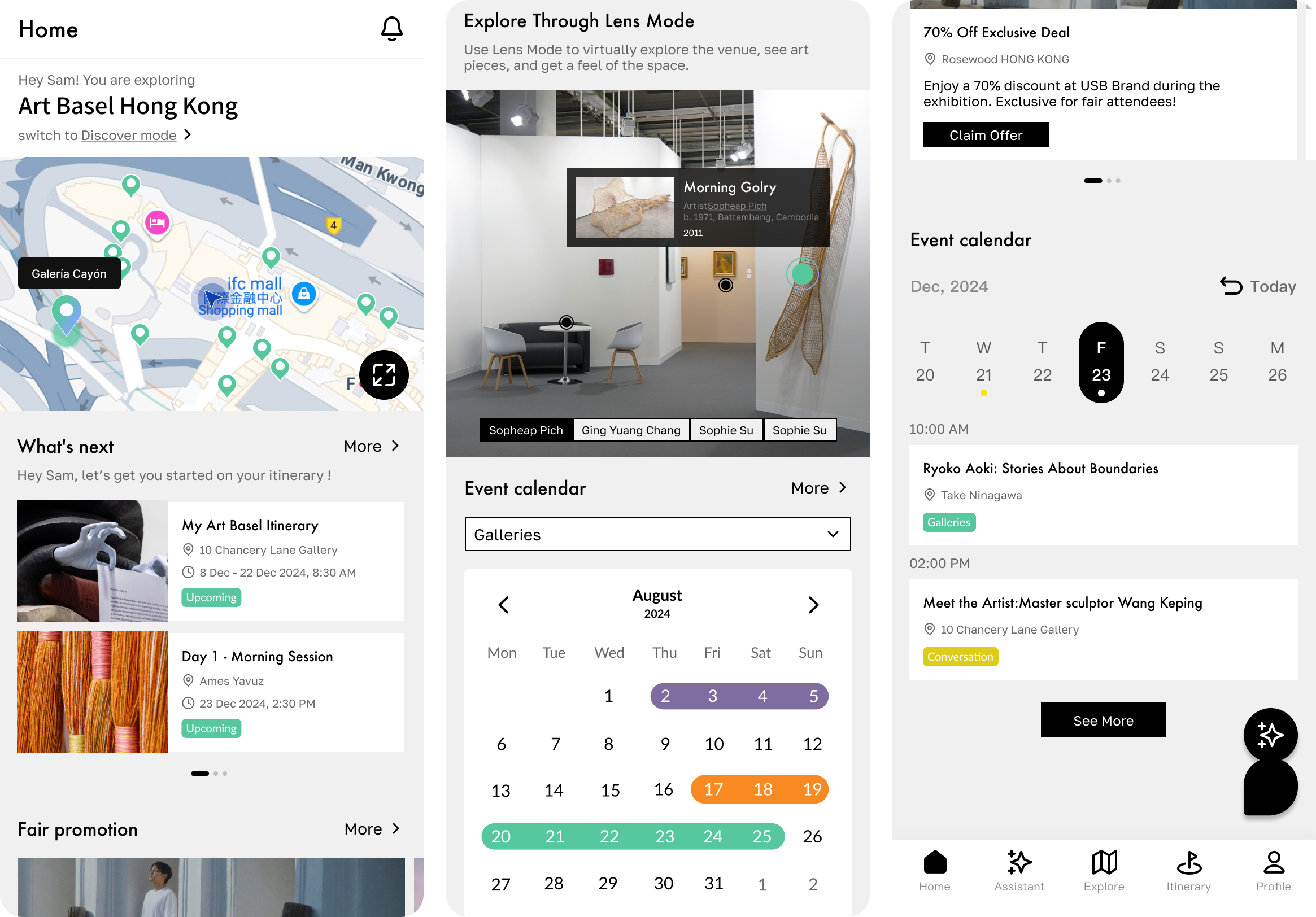
Visitors (B2C):
Map and itinerary reduce friction and boost orientation
Organizers (B2B):
Highlights featured booths and tracks user engagement through itinerary clicks.
1. Map anchors city-wide discovery
2. “What’s Next” adapts to user behavior
3. Calendar aids session planning
4. Content blocks showcase key artists and sponsors
Many users didn’t know how to begin—where to go, what to see, or how to use the routing tools.
We needed a simple, intuitive guide that reduced friction without adding UI clutter.
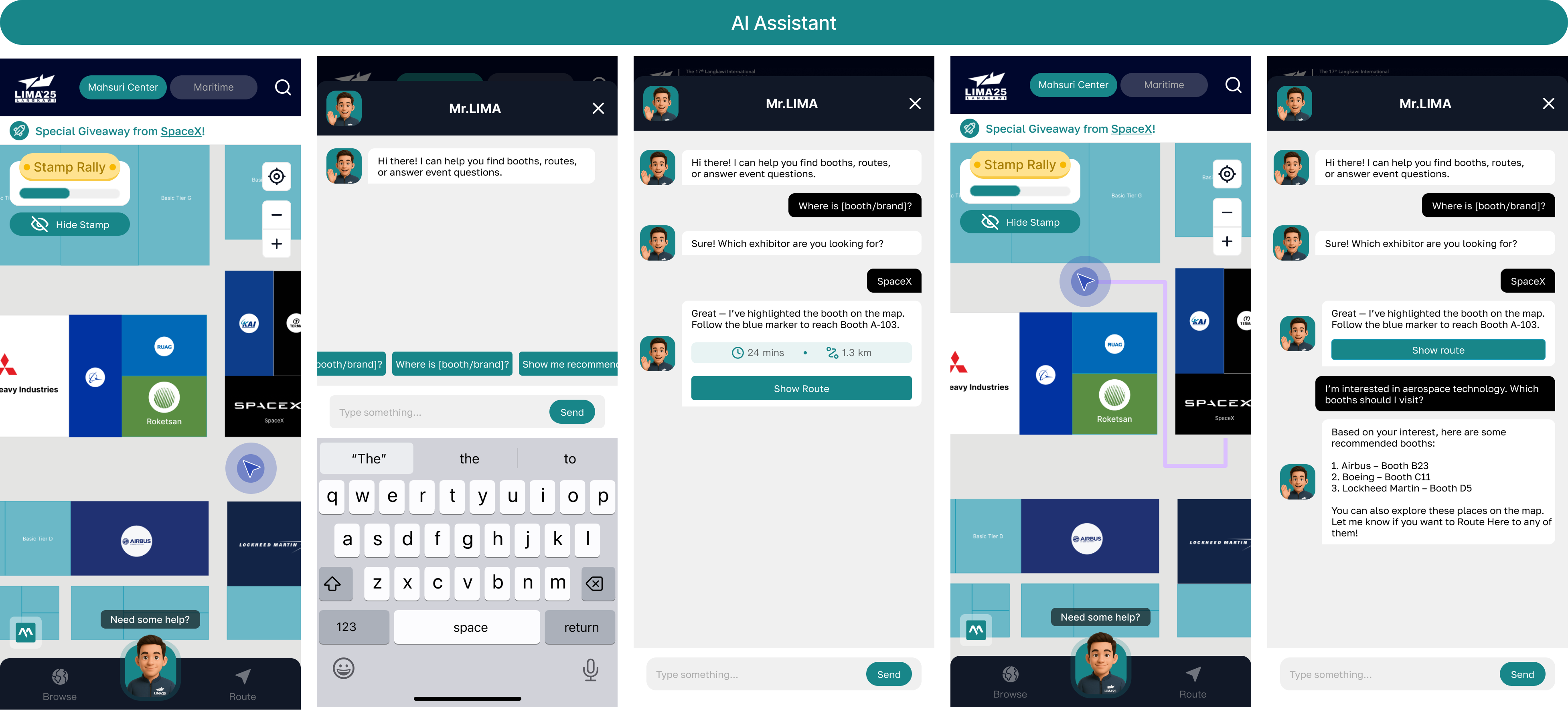
This assistant improved onboarding and boosted usage of routing and itinerary tools.
It also gave organizers a subtle way to surface key booths and gather engagement data.
Through a conversational chat, the AI helps users:
・Plan their visit
, Discover booths
・Navigate in real timeIt uses session context and rule-based prompts to connect intent with action

Visitors (B2C):
1. Suggested routing minimizes confusion
2.Smart defaults offer clarity without restricting choice
Organizers (B2B):
1. Influence booth exposure via metadata and tags
2. Observe visitor behavior through routing heatmaps
1. Routes adapt to time, interests, and location
2. Smart path suggestions balance freedom and flow
3. UI logic supported exposure strategies without imposing rigid structure
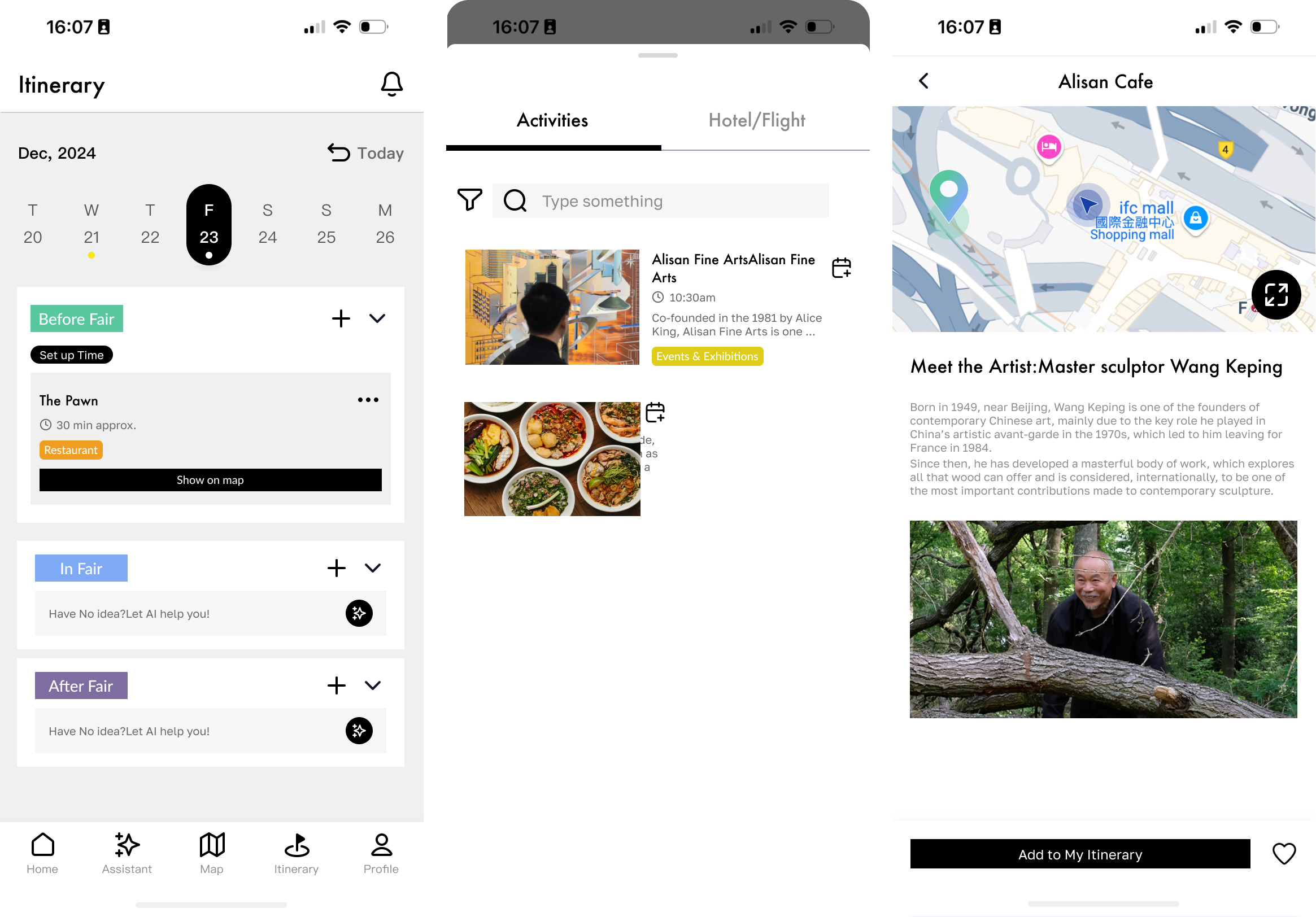
Visitors (B2C):
1. Custom plans support personal interests
2. Reduce friction for first-time visitor
Organizers (B2B):
1. Control booth exposure via tag priority
2. Understand user patterns across interest groups
1. AI generates itinerary based on booth context, user interest, and real-time flow
2. Visitors can edit freely ; organizers get insight passively
3. Encourages relevance-based discovery without strict pathing
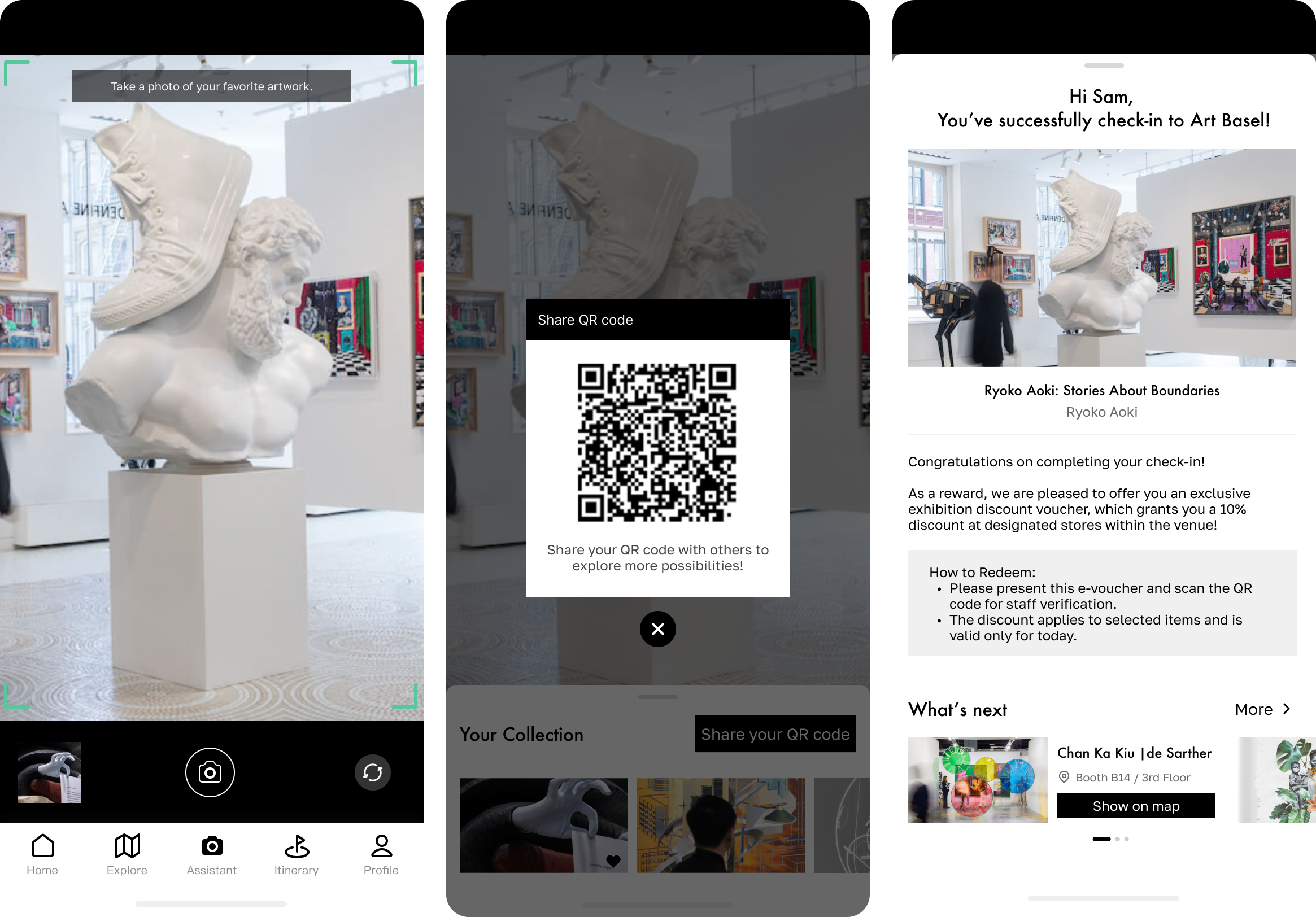
Visitors (B2C):
1. Custom plans support personal interests
2. Reduce friction for first-time visitor
Organizers (B2B):
1. Control booth exposure via tag priority
2. Understand user patterns across interest groups
1. Tap-to-scan booths with no login needed
2. Lens mode lowers friction and tracks interest zones
This project revealed a critical blind spot in large-scale exhibitions : How wayfinding influences flow, exposure, and decision-making.
By integrating GIS logic and AI-driven recommendations, we helped both visitors and organizers move with intent—not friction.
Without direct user testing, we relied on behavioral assumptions:
Visitors prioritize ease and relevance
/ Organizers seek predictable movement and flexible control
This case showed how UX, when paired with system logic, can shape not just interfaces—but environments and outcomes.
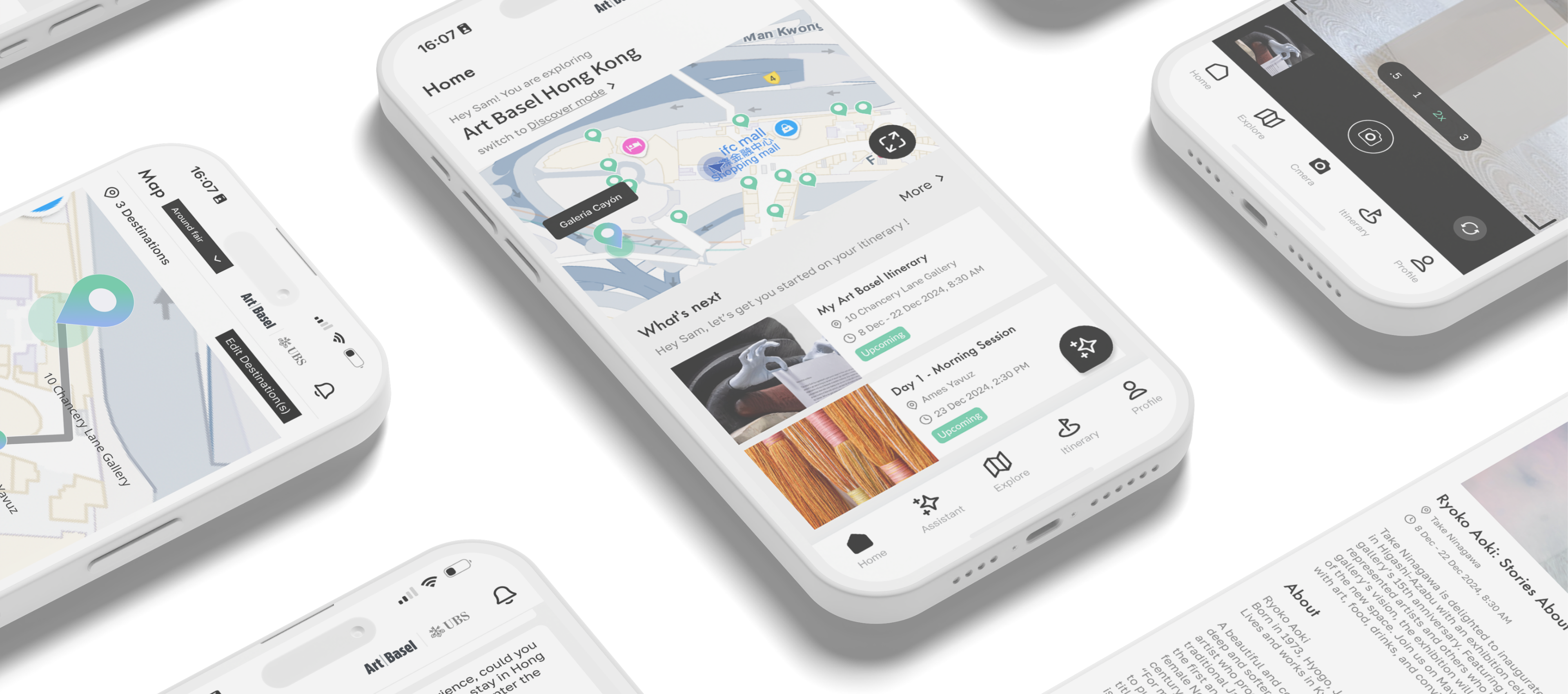
LIMA was where our exhibition platform transitioned from a working MVP (proven at Art Basel) into a modular, customizable product that served both 2C and 2B needs.It was also the first deployment where we fully designed and integrated features aligned with sponsorship visibility, gamification, and AI-based assistance—all in one ecosystem.
This diagram outlines the core structure of the LIMA platform,
showing how its modular components work together to serve both visitors (B2C) and organizers (B2B).
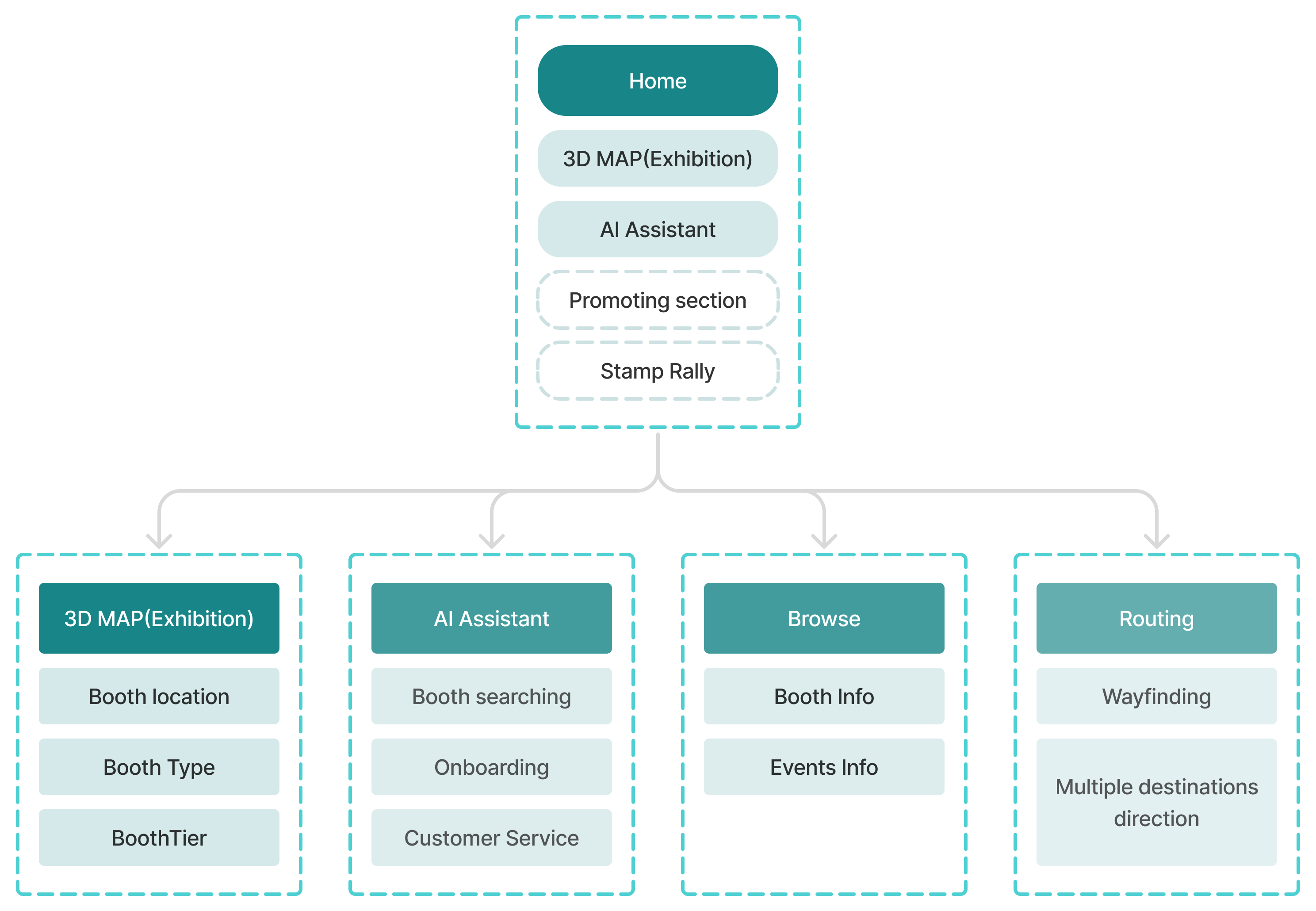
At the center is the Home module, connecting to four main functional areas:
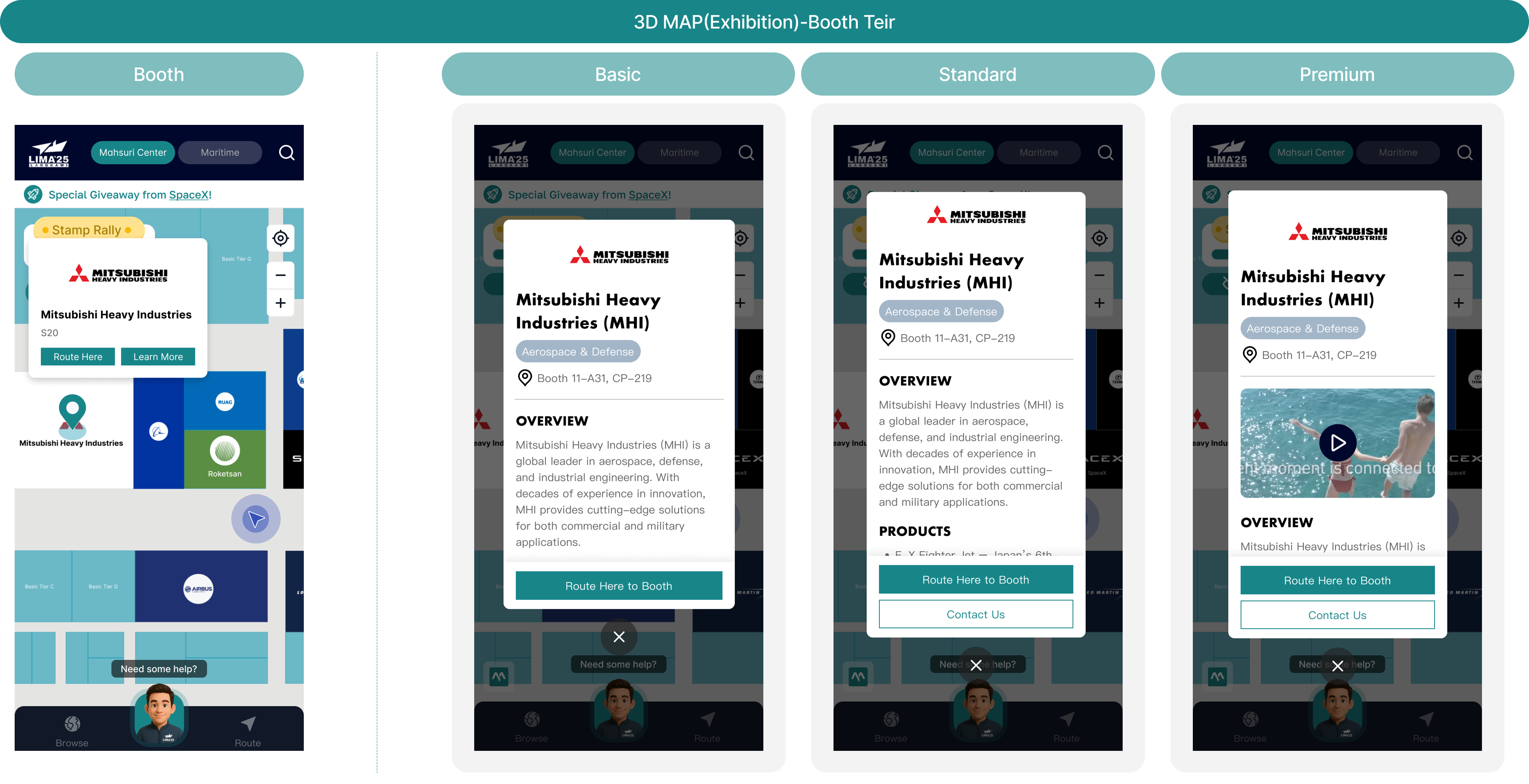
3D Map (Exhibition) – Displays booth locations, types, and tier-based visibility.
AI Assistant – Supports booth search, onboarding, and customer service.
Browse – Provides detailed booth and event information.
Routing – Guides visitors with wayfinding and multi-destination directions.
For LIMA, two additional modules—Promoting Section and Stamp Rally (Gamification)—extend functionality for sponsor exposure and visitor engagement, reflecting the platform’s shift toward richer commercial and interactive capabilities.
LIMA vs. Art Basel – Feature SummaryCore Overlap
Both share the same foundational modules—Home, 3D Map, AI Assistant, Browse, and Routing—supporting navigation, booth discovery, and visitor onboarding.
Key Additions in LIMA:
Promoting Section – Dedicated sponsor/partner exposure module to boost visibility.
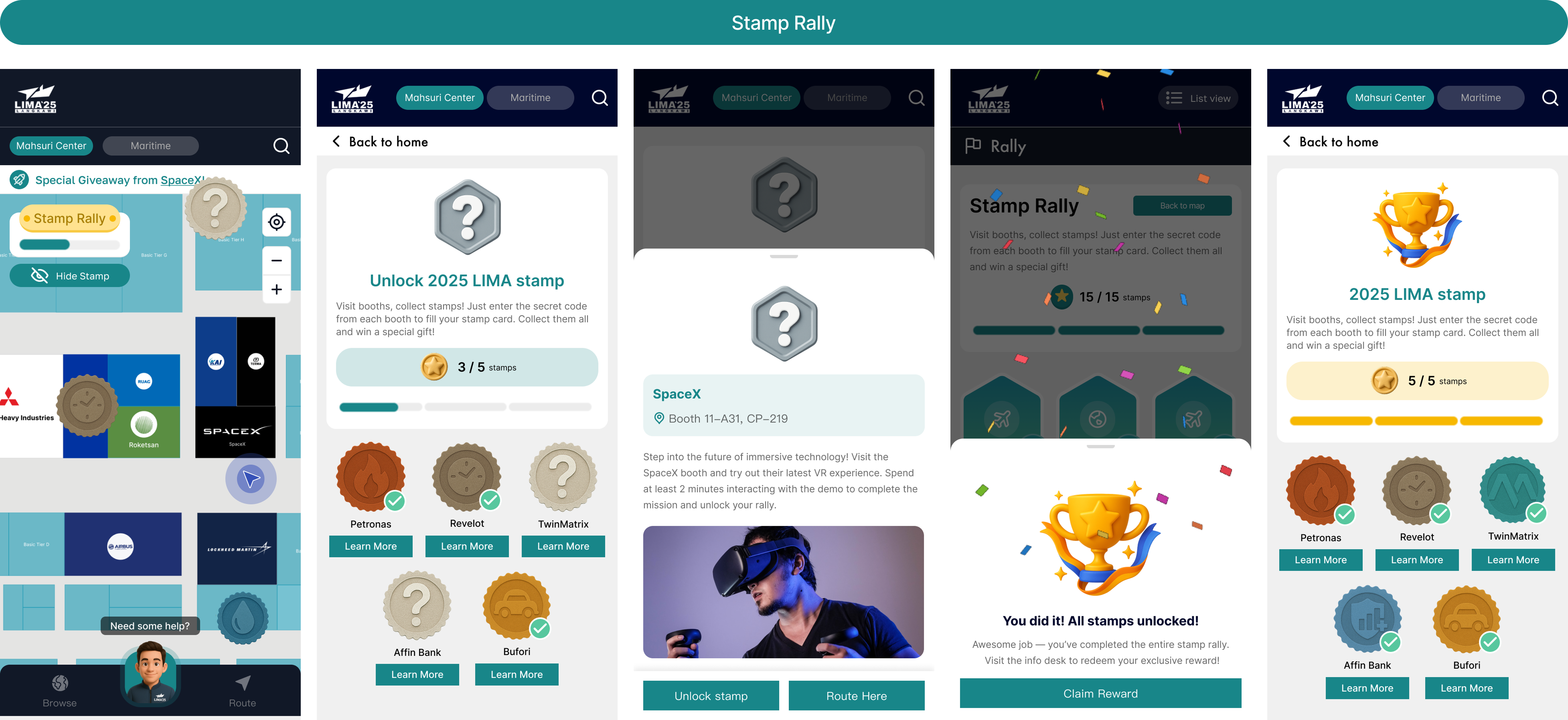
Stamp Rally (Gamification) – Mission-based booth visits rewarding attendees with physical prizes, increasing engagement.
Impact: These additions expanded the platform from a basic exhibition MVP (Art Basel) into a more commercial and engagement-driven version (LIMA), addressing both monetization and user retention needs.
LIMA builds on the foundational features validated in the Art Basel MVP—navigation, booth discovery, AI-assisted guidance, and event browsing. These proven modules form the platform’s core, ensuring smooth visitor orientation and operational support for organizers. By extending this base, LIMA delivers a stable, reusable framework ready for customization and scale.
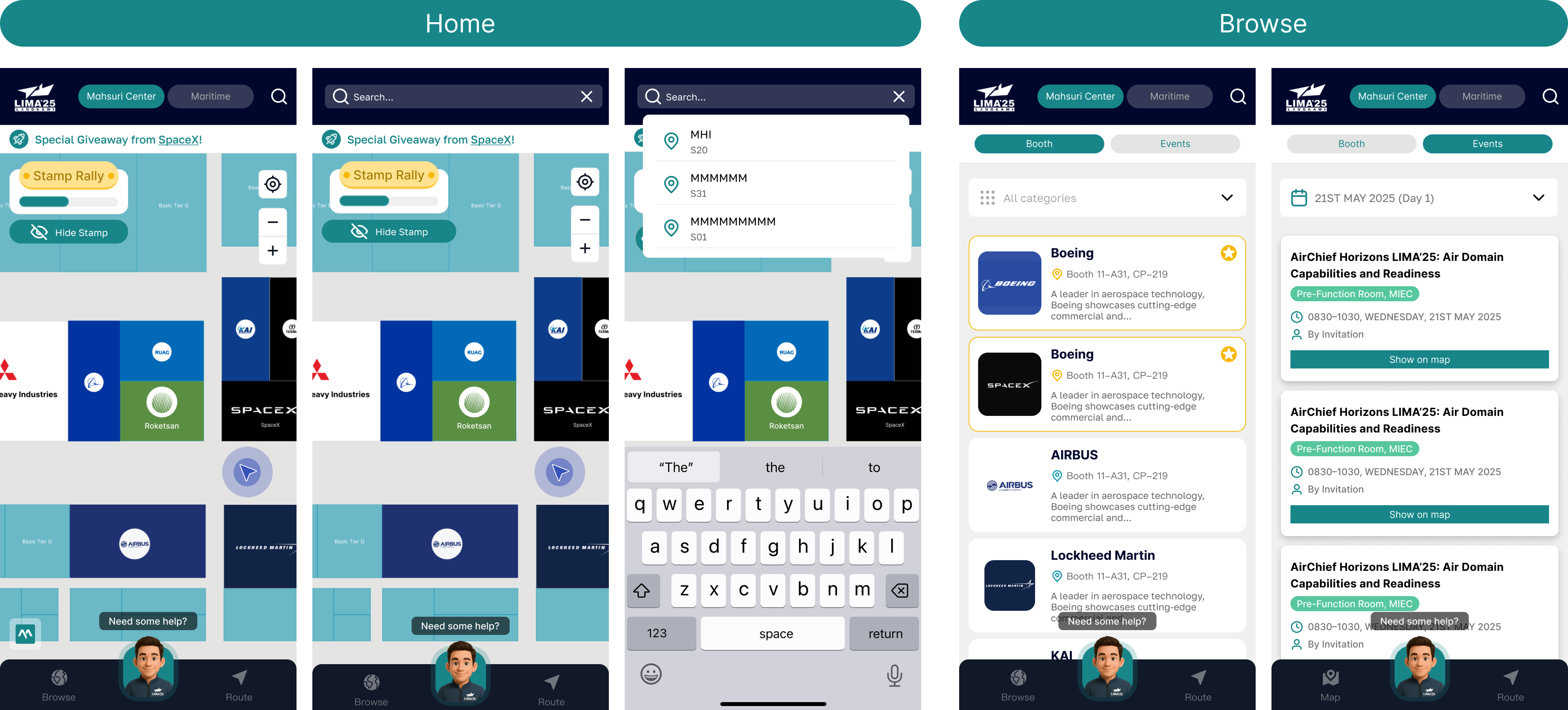
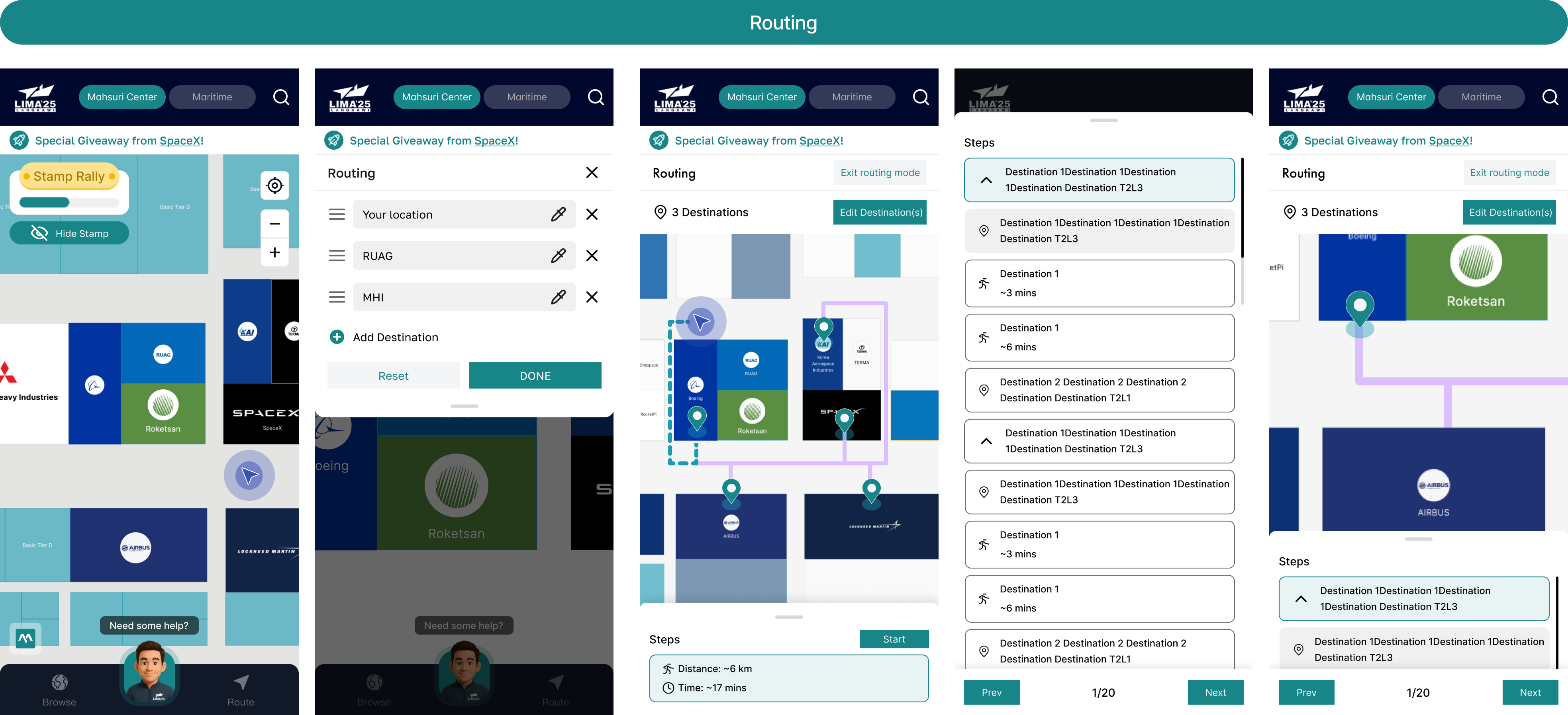
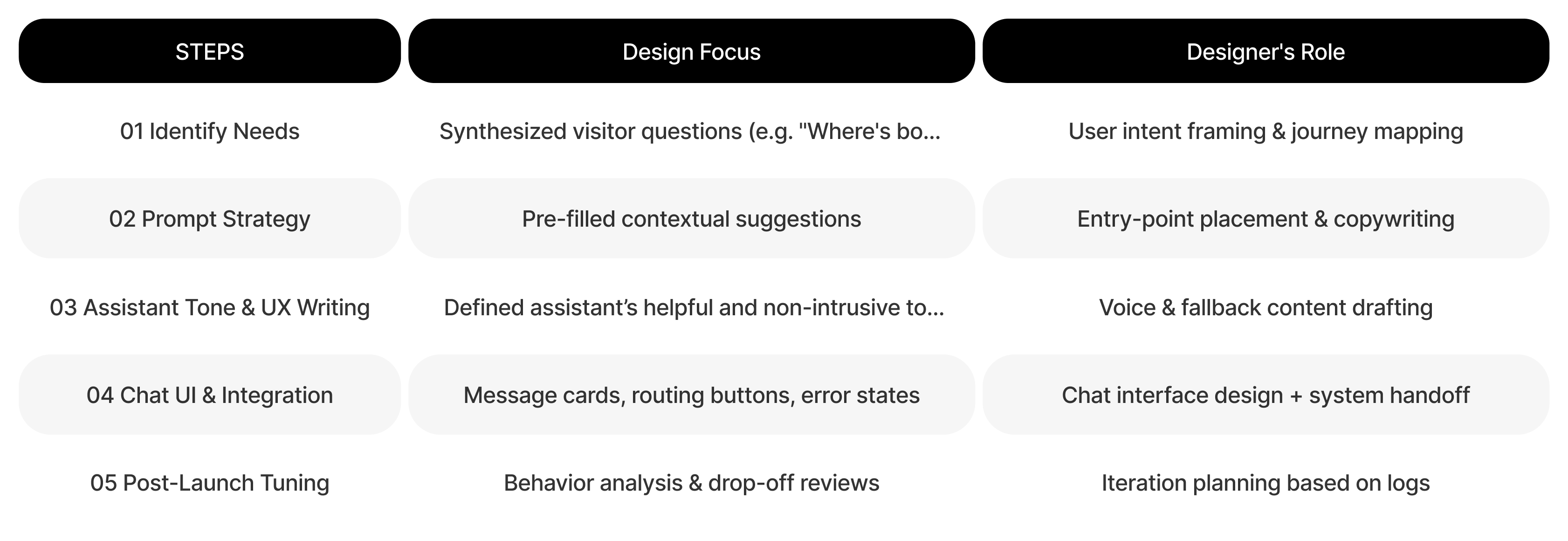
To reduce visitor friction and on-site staffing needs, we introduced a persistent AI assistant as a core module.
It shaped how users discover information, how AI responds, and how the experience scales across events.
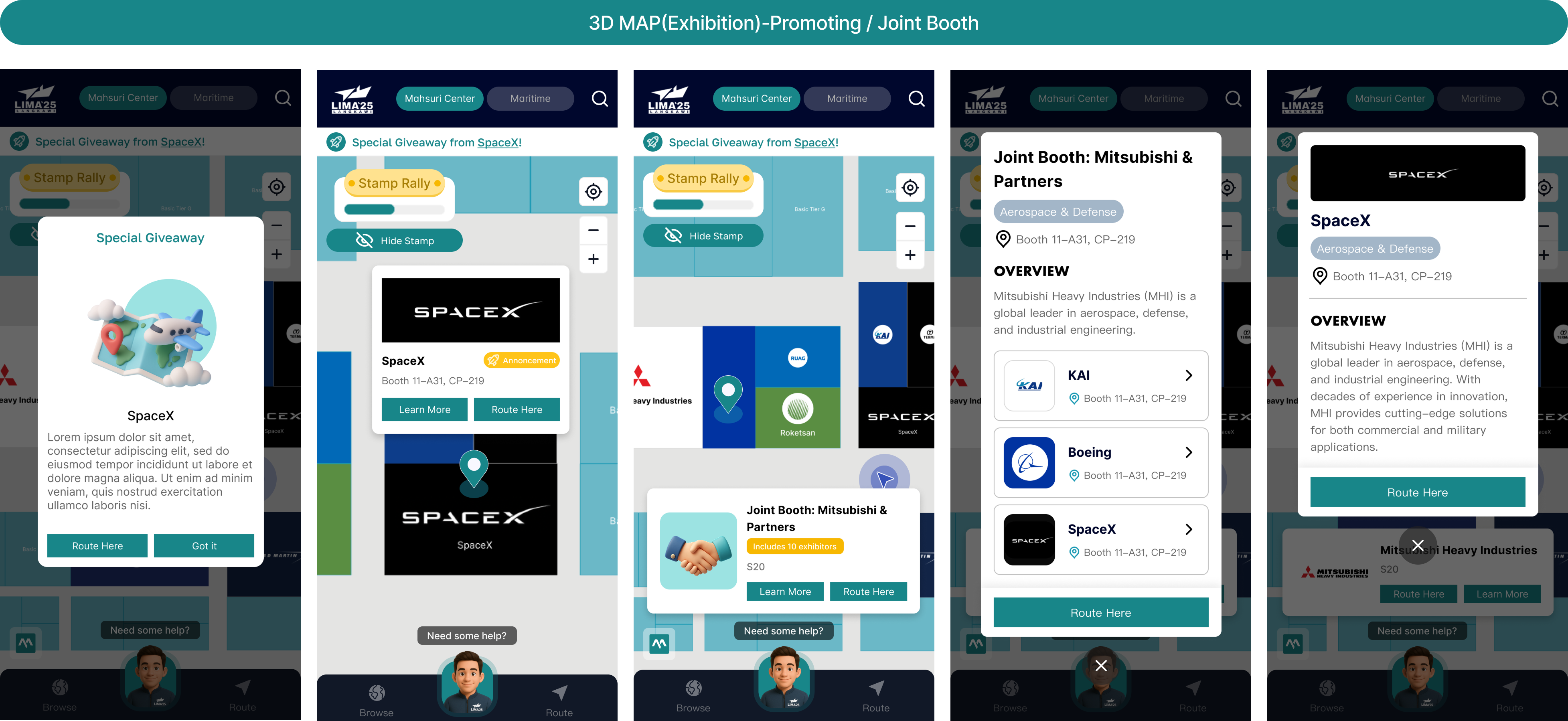
The LIMA custom features were designed to create a win–win ecosystem for both organizers and exhibitors.
By enabling dynamic booth and ad placement, organizers could unlock new revenue streams while offering sponsors higher visibility and measurable impact. At the same time, gamified missions encouraged visitors to explore more, interact with targeted booths, and enjoy a more engaging exhibition journey. This synergy not only improved the attendee experience but also strengthened the event’s commercial value.
The platform offered configurable ad placements—including banner slots and interstitials—
whose visibility could be adjusted by page type and time slot, all fully manageable through the organizer’s CMS.
Visitors could earn real-world rewards by checking into specific booths, with game logic incorporating progress tracking,
countdown timers, and reward redemption—driving higher foot traffic to targeted exhibitors.
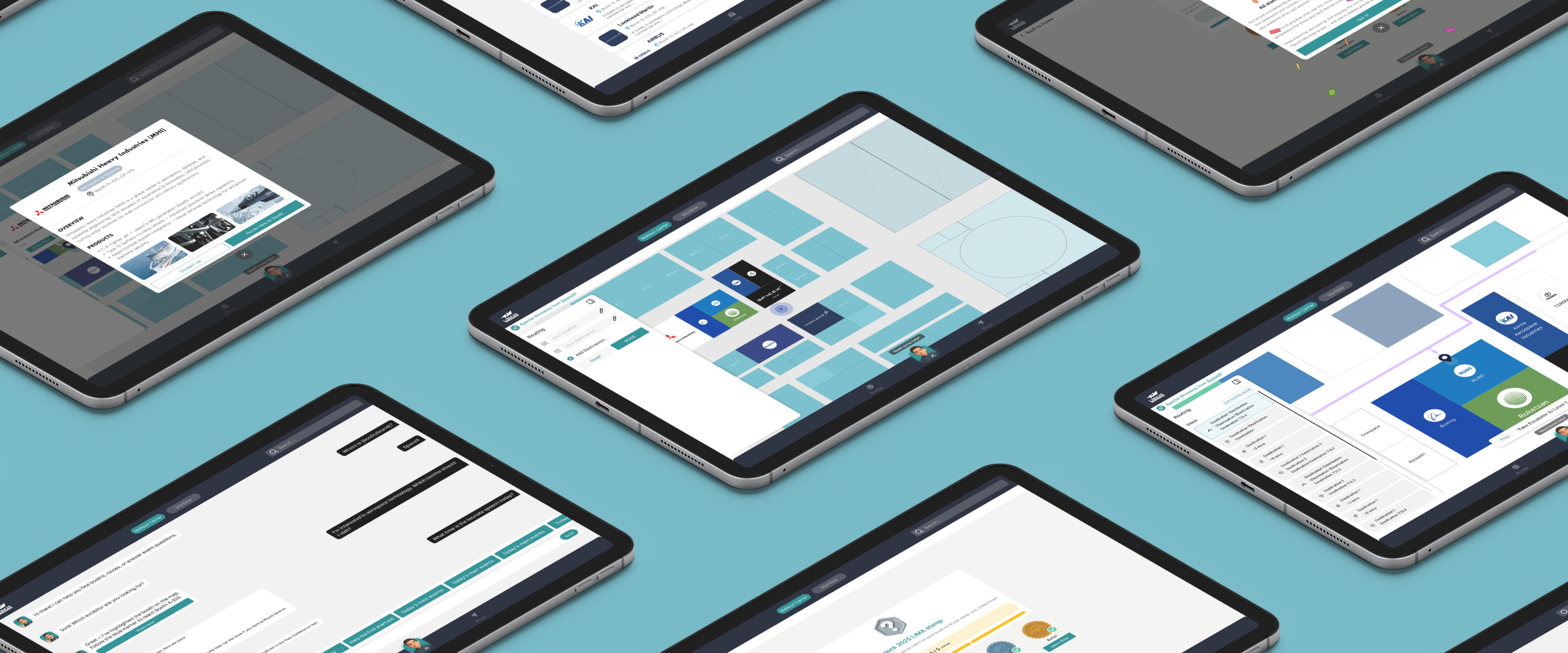
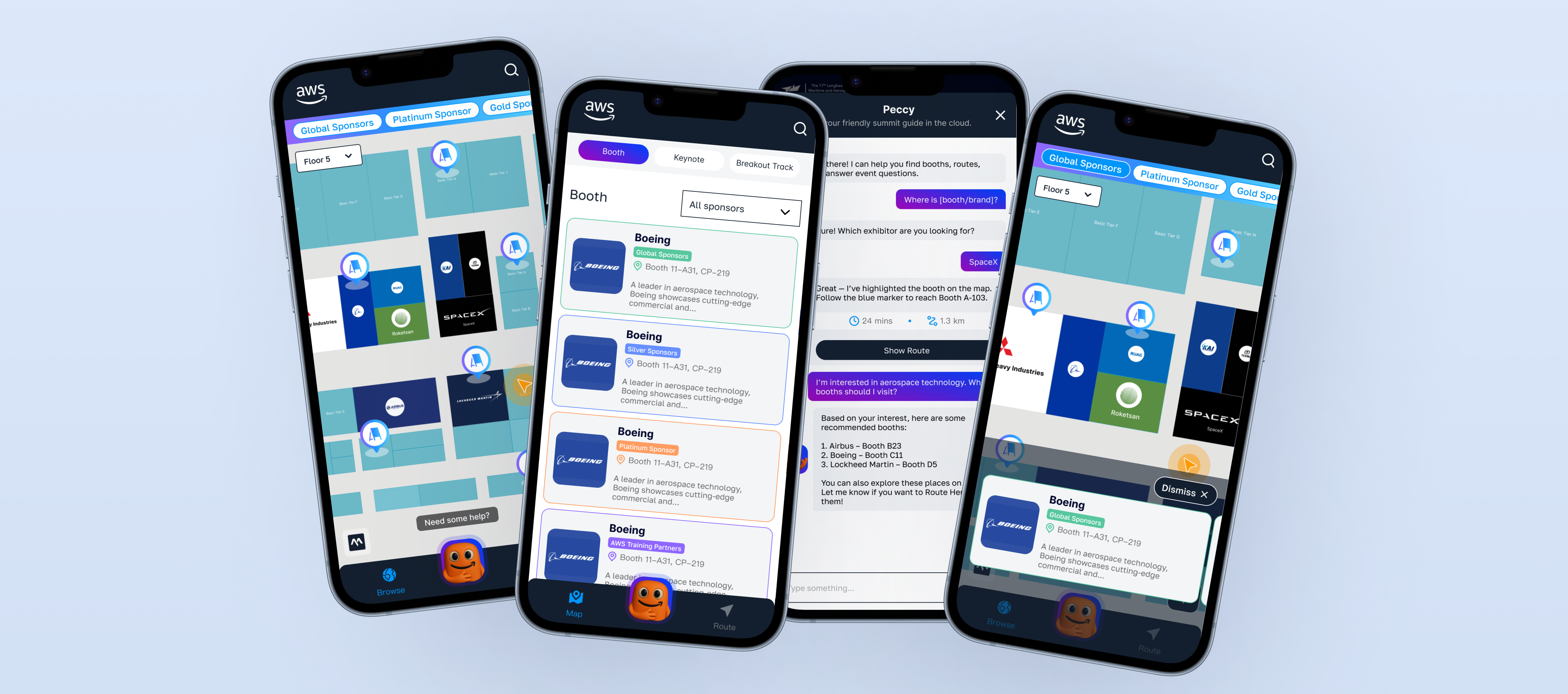
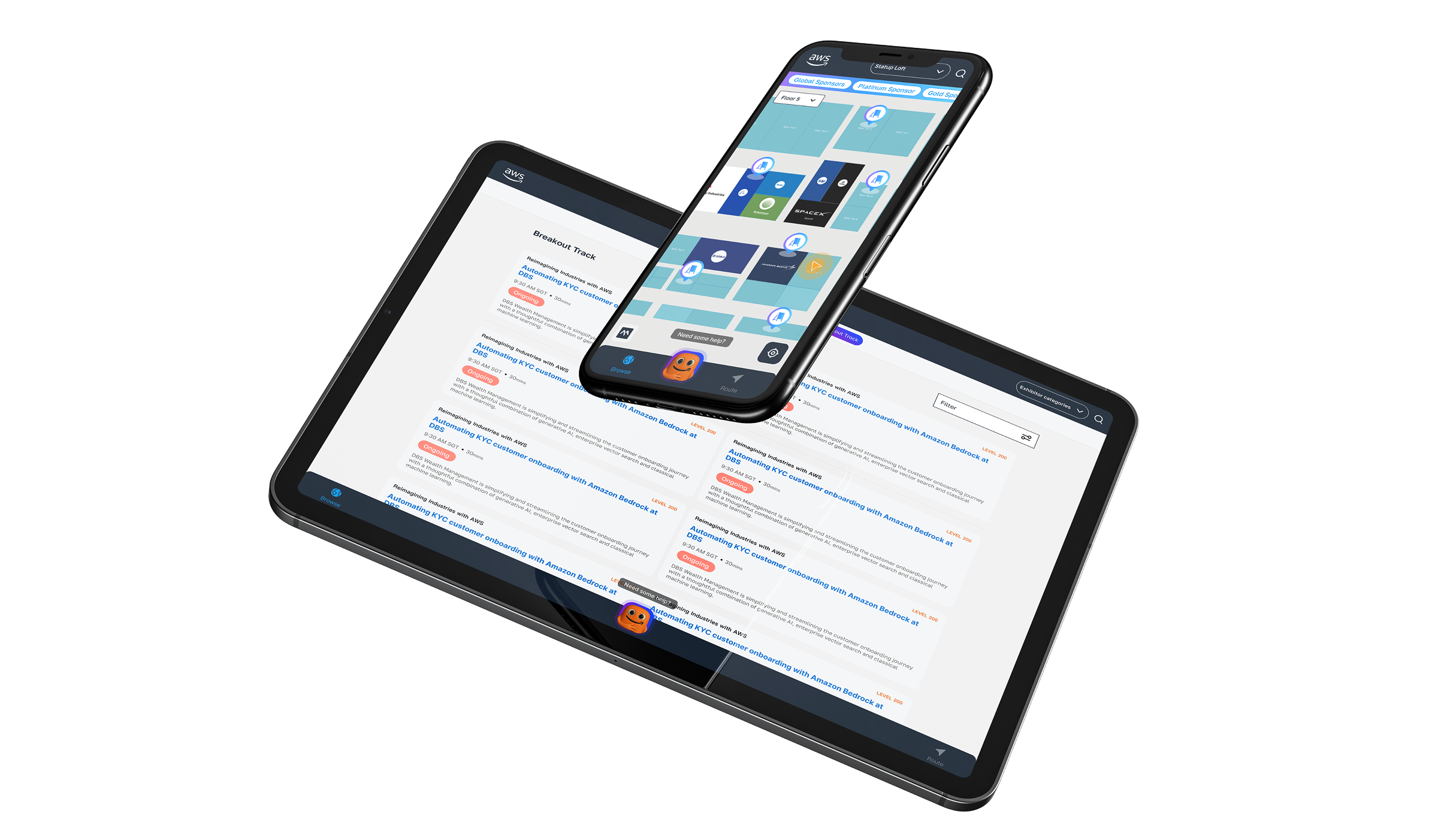
Following LIMA’s success, the same platform was deployed for AWS Summit Singapore with minimal changes—
mainly branding updates—demonstrating fast deployment, high reusability, and visual flexibility.
This confirmed the platform’s readiness for broader SaaS rollout and served as the final proof-of-concept before productization.
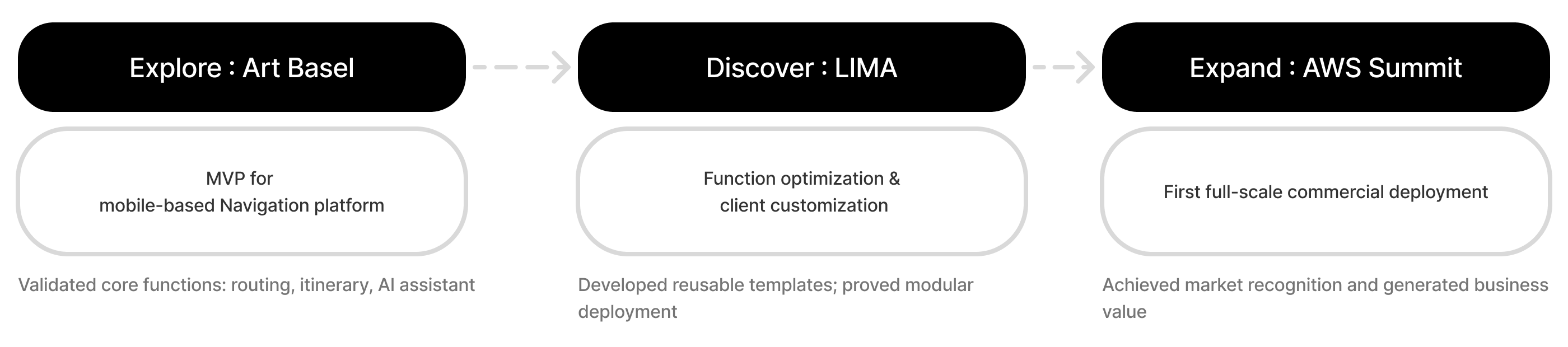
This case study outlines our journey from a one-off exhibition MVP to a modular, productized platform—
validated through deployments at Art Basel, LIMA, and AWS Summit Singapore.
Across these projects, we uncovered recurring challenges in the exhibition industry:
spatial disorientation, lack of personalization, fragmented sponsor visibility, and limited engagement.
1. Spatial disorientation
2. Lack of personalization
3. Limited sponsor visibility
4. Low visitor engagement
Repeatability – fast, multi-event rollout
Customizability – toggleable modules for different clients
Dual-role value – serving both visitors and organizers
While not fully self-serve, the platform’s hybrid model combines reusable core logic with onboarding services like 3D map creation and SDK integration—turning our domain expertise into a strategic, revenue-generating product.